2025 Export Update: Tariff-ready documents, HS code guidance & consolidated LCL shipping for mixed-SKU orders
0%

Choosing a supplier is not just a price comparison. For global buyers, Disposable Food Packaging must protect food, fit production lines, and arrive reliably. A paper bowl that softens under hot soup can create waste before it reaches the customer. A lid that fits poorly can disrupt an entire service shift.

Sustainable-design expert William McDonough’s well-known principle, “Waste equals food,” offers a useful lens for evaluating packaging materials. It is an ambition, not a guarantee: a compostable item only helps when suitable collection and processing systems exist. Buyers should examine material specifications, food-contact documentation, manufacturing capacity, sample quality, lead times, and end-of-life claims. Ask suppliers for current records, not just attractive brochures. Check whether certifications apply to the exact product and destination market. Details matter.

This guide compares leading suppliers through practical questions about product range, customization, quality controls, and international service. It also considers paper, molded fiber, and other common formats without treating any material as a universal answer. Some suppliers may look strong on paper but offer limited delivery flexibility. That matters. Buyers should test real samples with their own foods, temperatures, and handling routines before committing to large orders. No supplier is perfect, and a low unit price can hide costs in storage, damage, or inconsistent fit. The aim is a shortlist grounded in evidence, clear communication, and the needs of each market.
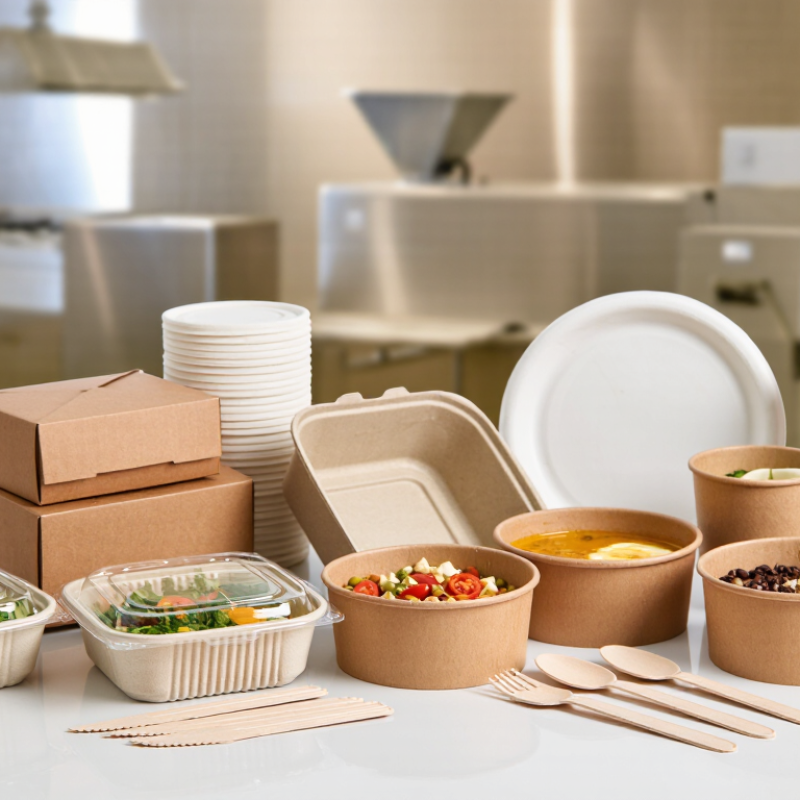
Top Disposable Food Packaging Suppliers for Global Buyers

What Disposable Food Packaging Suppliers Provide

Disposable food packaging suppliers provide more than cups and containers. They can supply trays, bowls, lids, wraps, cutlery, and takeaway bags in materials suited to hot, cold, oily, or moist foods. Buyers may also request custom dimensions, printed designs, sample runs, and carton-level packing. Fit matters. A lid that shifts during delivery can turn a clean meal into a costly complaint.

Material selection deserves careful review. OECD’s 2022 Global Plastics Outlook reports that packaging represents about 40% of plastic waste. That figure makes material use an important purchasing question, not just a marketing detail. Suppliers can explain material specifications, provide food-contact documentation for the intended market, and discuss recycled or fiber-based options where suitable. Ask for test records and sample products; a polished brochure alone proves little.

Good suppliers also support quality checks and delivery planning. They may confirm minimum order quantities, lead times, print tolerances, and how products are protected in transit. Test samples with the actual menu: pour hot soup, stack filled containers, and check whether condensation softens the base. Small trials help. Still, one sample cannot represent every production batch, and packaging that performs well in a warehouse may behave differently during a long delivery route.

Key Criteria for Evaluating Suppliers

For global buyers, supplier evaluation should start with the food and conditions each package must handle. A bowl for hot, oily meals needs different performance from a tray for chilled produce. Ask for material specifications and test reports that match the intended use and destination market. “Food grade” alone is too vague. Check heat tolerance, moisture resistance, and how lids fit after repeated handling.

Then test real samples. Fill them with the actual product, stack them in cartons, and inspect for leaks, odor, warping, or loose lids. Small details matter. One sample is not enough; request samples from separate production runs to assess consistency. Confirm monthly capacity, standard lead times, minimum order quantities, and how the supplier handles defects. A polished sample can hide uneven production. It is easy to overlook that.

Review sustainability claims with the same care. Ask what material a product contains and whether supporting documentation is available. Compare the full landed cost, including freight, storage space, damaged goods, and packaging dimensions. Clear answers often reveal more than a low quotation. Still, no checklist captures every operational problem; buyers should revisit their criteria after trial orders and record what went wrong, even when the issue seems minor.

Major Categories of Global Packaging Suppliers

Global food-packaging suppliers generally fall into three groups: direct manufacturers, regional distributors, and specialist material producers. Direct manufacturers convert paperboard, molded fiber, or food-contact plastics into cups, trays, lids, and takeaway boxes. They can offer closer control over dimensions and printing, but minimum order quantities may be high. Details matter.

Regional distributors stock standard items locally and can combine orders across product types. This may speed up replenishment and help buyers test demand before investing in custom tooling. Their range can be broad, though stock depth and traceability vary by market. Ask for current specifications, material composition, and test documentation—not just a catalogue image. A lid that looks right may still leak after a hot meal travels.

Specialist suppliers focus on one material or function, such as grease-resistant wraps, fiber formats, or tamper-evident closures. Integrated suppliers combine design, production, and logistics, which can simplify multi-country rollouts. Still, “global” capacity does not guarantee consistent lead times at every port. Test samples with actual foods, including oily meals and condensation. Compare delivered cost, damage rates, and storage needs, not unit price alone. Packaging claims can sound clearer than their evidence. A small pilot order often reveals gaps that a polished presentation misses.

Top Disposable Food Packaging Suppliers for Global Buyers - Major Categories of Global Packaging Suppliers

Supplier category Common materials Typical food-packaging products Common applications Buyer considerations
Paper and paperboard converters Paperboard, kraft paper, molded fiber; some products use barrier coatings or linings Folding cartons, cups, trays, clamshells, sleeves, takeaway bags Bakery items, dry foods, takeaway meals, hot and cold drinks Check grease and moisture resistance, intended food-contact use, coating composition, and local recycling or composting acceptance.
Plastic packaging manufacturers Common food-packaging plastics include PET, PP, HDPE, and PS; suitability varies by grade and design Cups, lids, containers, trays, cutlery, portion pots Prepared foods, deli items, beverages, sauces, and food service Confirm food-contact documentation, temperature limits, sealing performance, material identification, and compatibility with local waste systems.
Flexible packaging converters Paper, polyethylene, polypropylene, and multilayer film structures Pouches, wraps, sachets, bags, liners, and lidding films Snacks, sandwiches, bakery goods, frozen foods, and condiments Specify required barrier properties, seal type, filling process, shelf-life needs, and whether the structure is accepted for recycling in the target market.
Aluminum foil and metal packaging producers Aluminum foil and formed aluminum; products may incorporate paper or other materials Foil containers, baking trays, wraps, and lids Hot meals, baking, catering, takeaway, and food storage Check dimensions, lid fit, oven-use instructions, applicable food-contact requirements, and local collection and recycling arrangements.
Molded-fiber packaging manufacturers Molded pulp made from recovered paper or other plant fibers; some items have added coatings or barriers Plates, bowls, trays, clamshells, and protective inserts Quick-service meals, produce, catering, and protective food packaging Evaluate strength when wet, heat tolerance, barrier treatments, food-contact suitability, and whether local facilities accept the product for recycling or composting.
Compostable-material product manufacturers Materials may include certified compostable bioplastics, paper, or plant fibers; properties differ by formulation Selected cups, liners, bags, cutlery, trays, and food-service containers Food service and events where suitable collection infrastructure is available Request certification for the specific finished product, verify whether it is intended for industrial or home composting, and confirm local collection access.
Integrated food-service packaging distributors A range of paper, plastic, foil, and fiber products sourced from multiple manufacturers Mixed assortments of containers, cups, bags, cutlery, napkins, and serving items Restaurants, caterers, hospitality operators, and multi-site food businesses Compare product specifications, stock availability, minimum order quantities, delivery coverage, traceability, and consistency across repeat orders.

Global sourcing note: Food-contact rules, labeling requirements, packaging taxes, and recycling or composting systems differ by destination market. Buyers should verify the applicable requirements and request current technical documentation for each product.

How to Compare Supplier Products and Capabilities

Comparing disposable food packaging suppliers means testing the product, not just reading a catalogue. The OECD’s Global Plastics Outlook reported that packaging generated 40% of global plastic waste in 2019. That figure makes material choice and end-of-life claims worth checking closely. Ask suppliers for exact material specifications, food-contact documentation, and clear disposal guidance for each market. Small details matter. A paper bowl may look sturdy, yet soften under hot broth; a lid may leak when stacked during delivery. Request samples and test them with your actual food, fill temperature, storage time, and transport conditions.

Compare measurable performance: leak rate, seal strength, heat tolerance, barrier properties, and consistency between production batches. Ask for test methods and recent quality records, not just broad claims such as “compostable” or “recyclable.” Supplier capability matters too. Review production capacity, lead times, minimum order quantities, traceability, and how defects are handled. A practical audit can include a factory visit or a live review of quality-control records. Ask for evidence. One uncomfortable question is whether the supplier can maintain the same specification during peak-season orders. I have seen comparison sheets miss that point; it is easy to overlook, and worth revisiting before signing.

Compliance and Logistics in Global Sourcing

Top Disposable Food Packaging Suppliers for Global Buyers
Compliance and Logistics in Global Sourcing

Global buyers should treat compliance as part of supplier selection, not a final checkbox. Requirements can vary by destination, material, food type, and intended use. Ask for current specifications, relevant test reports, and clear batch traceability. Confirm these details against official market guidance or with a qualified local adviser. Paperwork can look complete and still miss a requirement.

Logistics deserves equal attention. Request realistic lead times that include production, inspection, port handling, and customs clearance. Compare shipping terms, and confirm who manages export documents, cargo insurance, and damage claims. Before placing a large order, test a small shipment. Check cartons for moisture, crushing, and label accuracy. In practice, forecasts still miss; a modest schedule buffer can prevent rushed decisions.

Tips: Keep one shared file for certificates, product specifications, approved artwork, and shipment records. Check document dates and revisions before each reorder. Record small problems too; they are easy to overlook, but can repeat.

FAQS

What should buyers check before choosing food packaging?

Match the package to its food and conditions. Hot, oily meals need different performance from chilled produce.

Why are material specifications important?

“Food grade” is too vague. Ask for exact materials, heat limits, moisture resistance, and relevant food-contact documents.

How should samples be tested?

Fill samples with the actual food, then stack and handle them. Check for leaks, odors, warping, and loose lids. Test the real thing.

Is one sample enough to judge quality?

No. Request samples from separate production runs to check consistency. A polished sample can hide uneven results.

Which performance details should buyers compare?

Compare leak rates, seal strength, heat tolerance, and barrier performance. Ask how these results were measured.

What should buyers ask about supplier capacity?

Confirm monthly capacity, lead times, minimum order quantities, and defect procedures. Ask whether specifications stay consistent during peak orders.

How can sustainability claims be checked?

Request material details and supporting documents. Verify disposal guidance for each destination market; broad claims need evidence.

What belongs in the full cost comparison?

Include freight, storage space, damaged goods, and package dimensions. A low quotation may not stay low.

How can buyers learn from trial orders?

Record leaks, softening, and other small problems. Review the criteria after each trial. I still find minor issues easy to miss.

Conclusion

Choosing the right Disposable Food Packaging supplier involves more than comparing prices. Suppliers may offer containers, cups, trays, wraps, and other items for takeaway, delivery, catering, and retail use, with options in different materials, sizes, and designs. Buyers should assess product quality, customization, production capacity, minimum order quantities, lead times, communication, and after-sales support. Comparing samples and technical specifications can help confirm that products suit intended foods, handling conditions, and storage needs.

Global suppliers vary in their product range, manufacturing capabilities, and service models, so buyers should compare their strengths against specific business requirements. Before placing an order, clarify material details, packaging specifications, documentation, shipping arrangements, delivery timelines, and responsibilities for handling delays or product issues. Careful attention to applicable market requirements and import procedures can reduce sourcing surprises. A structured evaluation helps buyers balance cost, reliability, product performance, and logistics when selecting a supplier for long-term needs.

Alden

Alden

Alden is a marketing professional with a deep understanding of the company’s products, customers, and the needs they are designed to address. He regularly contributes expert articles to the company website, making complex product information clear, useful, and approachable. Through careful research......