2025 Export Update: Tariff-ready documents, HS code guidance & consolidated LCL shipping for mixed-SKU orders
0%

In 2026, Takeaway Food Packaging is expected to do more than carry a meal from kitchen to customer. It must protect food during travel, retain heat or freshness, and remain easy to open. A curry needs a secure, leak-resistant container. A crisp salad needs room to breathe. Small details can decide whether a meal arrives appetizing or disappointing.

Popular options include paperboard boxes, molded-fiber trays, recyclable plastic containers, and reusable packaging systems. Each suits different foods and service needs. Paperboard works well for many dry or lightly sauced dishes, while sturdy containers can better manage soups and heavier meals. Yet material labels alone do not tell the whole story. A package’s performance depends on its design, local disposal facilities, and how customers actually use it.

This guide compares the leading takeaway formats and explains their practical strengths and limitations. It considers insulation, leak resistance, stackability, presentation, and end-of-life handling. These factors matter to restaurants managing busy service, as well as customers carrying food on foot, by bike, or in a car. Packaging claims should be checked against supplier specifications and relevant food-contact guidance. There is no universal winner. A container that looks sustainable may not fit local recycling systems, and that is worth questioning. The best choice is usually the one that protects the meal reliably while matching the menu, budget, and available waste infrastructure.
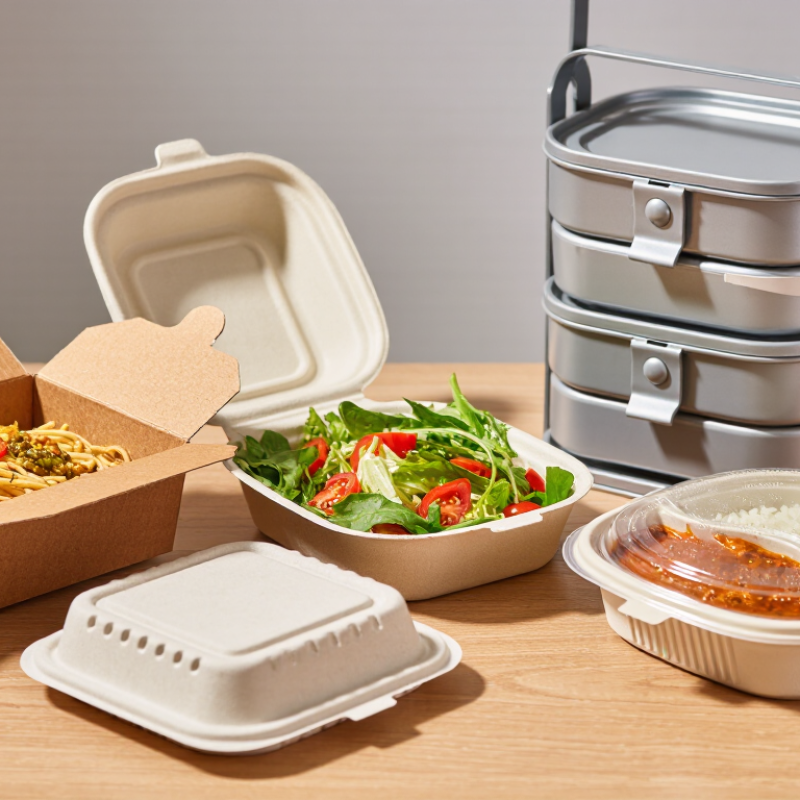
What Are the Top Takeaway Food Packaging Types in 2026?

What Takeaway Food Packaging Is and What It Needs to Do

Takeaway food packaging is the container, wrap, cup, or bag that protects a prepared meal between the kitchen and the customer. It must fit the food, resist leaks, and remain practical to carry and open. The National Restaurant Association’s 2024 State of the Restaurant Industry reports that 47% of U.S. adults pick up restaurant takeout at least once a week. Packaging is part of the meal’s service. A loose lid can undo careful cooking.

Its job is also to manage heat and moisture. A vented box can help keep fried food crisp, while a snug, insulated container can slow heat loss from soup. USDA food-safety guidance places 40°F to 140°F in the temperature “danger zone,” so safe handling matters during transit. The package alone cannot guarantee safety. Timing matters, too. It should also use food-contact materials suited to the meal and give customers clear opening and storage cues. The trade-off is real: stronger packaging may prevent spills, yet add material. EPA’s 2018 Advancing Sustainable Materials Management report estimated that containers and packaging generated 82.2 million tons of U.S. municipal solid waste. Better design starts with the actual food, travel time, and disposal options—not a one-size-fits-all box.

Top Takeaway Food Packaging Types in 2026

Packaging must protect food, prevent leaks, retain suitable temperature, and suit the meal. Material recovery is another consideration—but local recycling rules vary.

How to read this: These U.S. rates are approximate calculations from EPA-reported amounts generated and recycled in 2018 for all containers and packaging—not takeaway packaging alone. They provide material-level context, not a guarantee that a specific takeaway item is recyclable. Source: U.S. EPA, Advancing Sustainable Materials Management: 2018 Fact Sheet.

How Containers and Boxes Protect Meals During Delivery

In its 2024 State of the Restaurant Industry report, the National Restaurant Association says nearly 75% of restaurant traffic is off-premises. Packaging is part of the meal’s performance, not just its presentation. A soup container needs a secure lid and leak-resistant seams when a courier brakes. Fried food needs some ventilation, or trapped steam can soften its crust before arrival.

Rigid polypropylene tubs work well for saucy or stacked meals, while paperboard boxes and molded-fiber bowls suit many solid foods. The right choice depends on heat, moisture, and travel time. Insulated delivery bags can slow heat loss, but they cannot replace safe temperature control. USDA guidance advises keeping perishable food at room temperature for no more than two hours. Still, no container solves every trade-off: tighter seals reduce spills but may trap condensation. That detail is easy to overlook.

Tips: Match the container to the food, then test it on a real delivery route. Check for leaks, soggy corners, and loose lids. Test before scaling. A small trial can expose problems that look invisible on a packaging spec sheet.

Which Materials Suit Different Takeaway Food Types

Choosing takeaway packaging starts with the food, not the container. Hot, saucy dishes need different protection from crisp pastries or chilled salads. Steam changes everything. For curries, noodles, and stews, leak-resistant containers made from coated paperboard or suitable food-grade plastic can help keep sauces contained. Vented lids may reduce trapped steam, though they can let food cool faster. A tight seal matters most during delivery.

For fried foods, avoid packaging that traps moisture. Paperboard boxes with small vents can help fries and breaded items stay crisp longer. They will not stay crisp forever. For salads, fruit, and cold sides, clear food-grade plastic makes contents easy to inspect, while paper bowls work well when paired with a moisture-resistant lining. Test dressings separately; a small leak can soften the base quickly.

Material choice also affects heat retention, stacking, and disposal. Aluminum trays handle oven reheating well, but they are not suitable for every microwave. Molded fiber can be sturdy for burgers or grain bowls, yet performance varies when food is oily or very wet. There is no perfect container, and I would not assume a compostable label means local facilities can process it. Check how a package performs with your actual portion, temperature, and delivery time. A brief trial often reveals more than a tidy specification sheet.

How Bags, Wraps, Cups, and Trays Support Food Service

What Are the Top Takeaway Food Packaging Types in 2026?
How Bags, Wraps, Cups, and Trays Support Food Service

Takeaway packaging works best when each format solves a specific handling problem. Bags carry several items, but need a stable base for soup containers. A damp bottom can fail before delivery. Wraps keep sandwiches and pastries together, reduce loose crumbs, and make eating easier without utensils. They are less suitable for foods with heavy sauces. Cups need snug lids and room for toppings. Hot drinks may also need sleeves to keep hands comfortable. Trays separate meal components, protect crisp foods from steam, and make mixed orders easier to carry. Oversized trays, though, waste space and can let food slide.

Tips: Match packaging to food temperature, moisture, and travel time. Test a real order on a short route. Gently tilt the cup, check the bag handles, and open the wrap after ten minutes. Small details matter.

Packaging affects more than appearance. A secure lid can prevent spills, while a vented container may help fried food stay crisp. But ventilation can cool a meal faster. The trade-off is not always obvious; the right choice depends on the menu and delivery distance. Staff feedback can reveal where lids loosen or trays buckle during busy service.

What to Consider When Choosing Takeaway Packaging in 2026

What Are the Top Takeaway Food Packaging Types in 2026?

Choosing takeaway packaging starts with the food and its journey. A crisp pastry needs different protection from a saucy curry or chilled salad. Paperboard boxes suit many dry foods, while leak-resistant containers can help protect meals with broth or dressing. Molded-fiber trays feel sturdy, but may soften when exposed to moisture for too long. Plastic containers can show the food clearly, though they are not ideal for every meal or local waste system. There is no perfect option.

Tips: Test the actual menu. Check the lid fit. Pack a hot meal, then carry it for 20 minutes. Look for leaks, trapped steam, soggy corners, and containers that buckle when stacked. Make sure staff can close each package quickly during a busy service.

Also consider portion size, storage space, and disposal access. A container that is technically recyclable may not be accepted in every local collection program, so check before making claims. Ask suppliers for material and temperature details, and verify them against your kitchen’s real conditions. Cost matters, but so does food arriving intact. I have seen packaging look convincing on a counter and disappoint in a delivery bag; a small trial can reveal that gap. Avoid choosing by appearance alone.

FAQS

Which packaging works best for hot, saucy meals?

Coated paperboard or suitable food-grade plastic can help contain curry, noodles, and broth. Check the lid seal. A brief tilt test may catch leaks.

How can fried foods stay crisp during delivery?

Use a paperboard box with small vents to release steam. Fries still soften over time. Ventilation can also cool the meal faster.

What packaging suits salads and cold sides?

Clear food-grade plastic makes ingredients easy to inspect. Paper bowls can work with moisture-resistant lining. Test dressing separately; a small leak can soften the base.

Are aluminum trays suitable for reheating takeaway meals?

They handle oven reheating well, but are not suitable for every microwave. Check the tray’s temperature guidance before use.

How should bags, wraps, cups, and trays be chosen?

Bags need a stable base for soup containers. Wraps suit sandwiches better than heavily sauced foods. Cups need snug lids, and trays should separate meal components without excess space.

What should staff test before choosing a container?

Pack a real meal and carry it for 20 minutes. Check for leaks, trapped steam, soggy corners, and buckling. Busy hands matter too.

Does a compostable or recyclable label guarantee local disposal?

No. Local collection systems vary. Check accepted materials before making disposal claims. I still find this easy to misjudge.

How can packaging reduce spills during delivery?

Gently tilt a filled cup, check bag handles, and stack containers as they would travel. A secure lid helps, but oversized trays can let food slide.

Conclusion

Takeaway Food Packaging plays a key role in keeping meals secure, appealing, and convenient from the kitchen to the customer. Containers and boxes help prevent spills, protect food from damage, and retain warmth or freshness during delivery. The right design also makes meals easier to stack, carry, open, and enjoy.

Different foods call for different materials and formats. Sturdy containers suit saucy or hot dishes, while breathable options can help preserve the texture of crisp foods. Bags, wraps, cups, and trays each support particular serving needs, from carrying several items to holding drinks or separating meal components. When choosing packaging in 2026, food businesses should consider the menu, portion size, transport conditions, ease of use, and material efficiency. A thoughtful choice balances reliable protection with practical service and a positive dining experience.

Alden

Alden

Alden is a marketing professional with a deep understanding of the company’s products, customers, and the needs they are designed to address. He regularly contributes expert articles to the company website, making complex product information clear, useful, and approachable. Through careful research......