High-Performance Food Packaging Containers
Engineered for commercial delivery, hot-fill structural rigidity, grease isolation, and international eco-compliance.
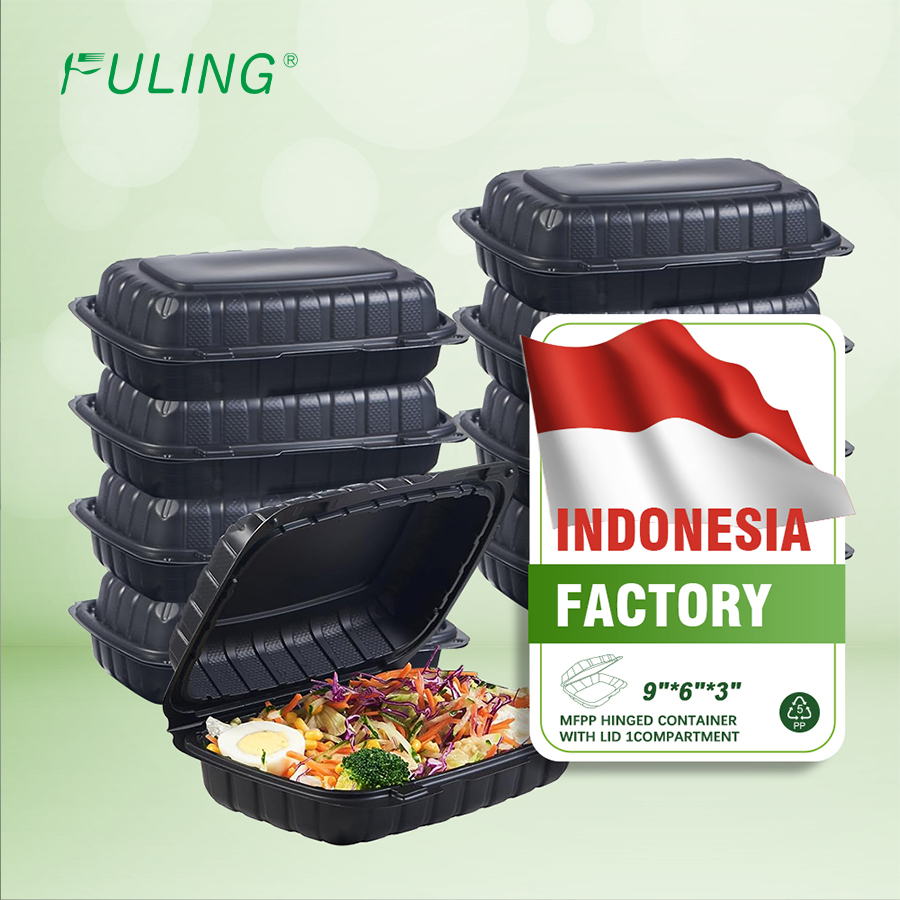
FULING Black Take Out Food Containers 9x6 Inch Hinged MFPP Disposable Clamshell Boxes
- Mineral-Filled Polypropylene (MFPP)
- Smart Anti-Sogging Venting Design
- Microwavable & Cut-Resistant Base

FULING Wholesale Disposable PP Container 3 Compartments with Leak-Proof Lid
- Hot-Fill Virgin Polypropylene
- Precision Snap-Lock Sealing Rim
- Meal Prep & Commercial Catering

FULING Modular Disposable PP 1, 2 & 3 Compartment Takeaway Food Packaging Boxes
- High-Clarity Anti-Fog Clear Lid
- Stackable Friction Lug Geometry
- BPA-Free Food Grade Certified
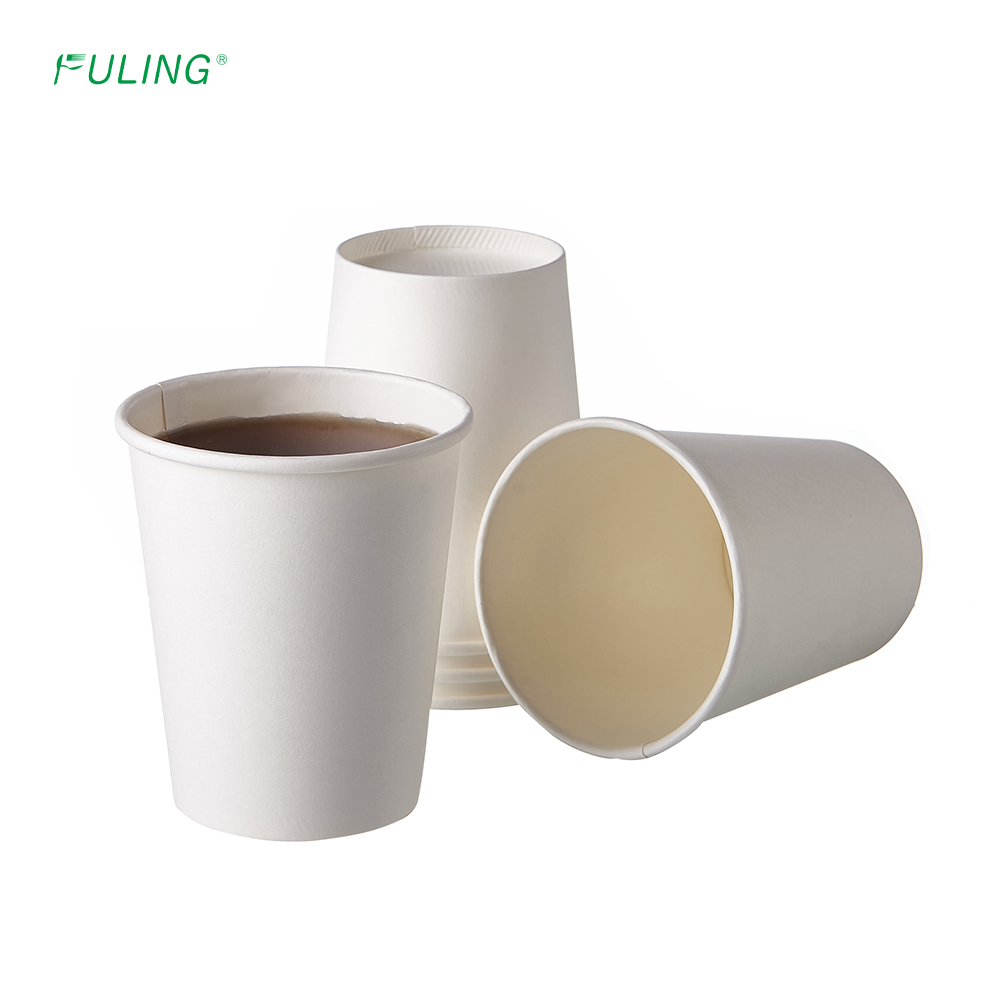
FULING Custom Printed 4oz, 8oz, 12oz Double-Wall Hot Beverage Paper Cups
- CE & EU 10/2011 Barrier Coating
- Water-Based Dispersion/PE Lining
- Thermal Insulation Double Layer
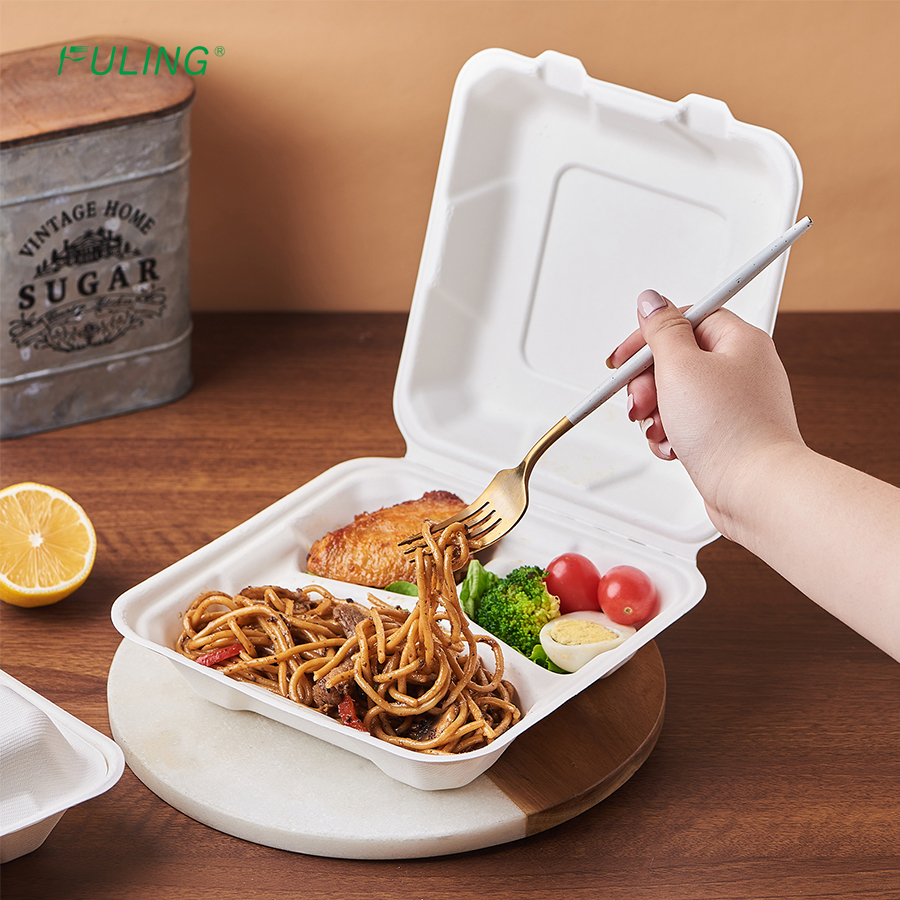
FULING Biodegradable Sugarcane Bagasse 3-Compartment Hinged Clamshell Container
- 100% Home & Industrial Compostable
- PFAS-Free Water & Oil Barrier
- Heavy-Duty Plant Fiber Construction
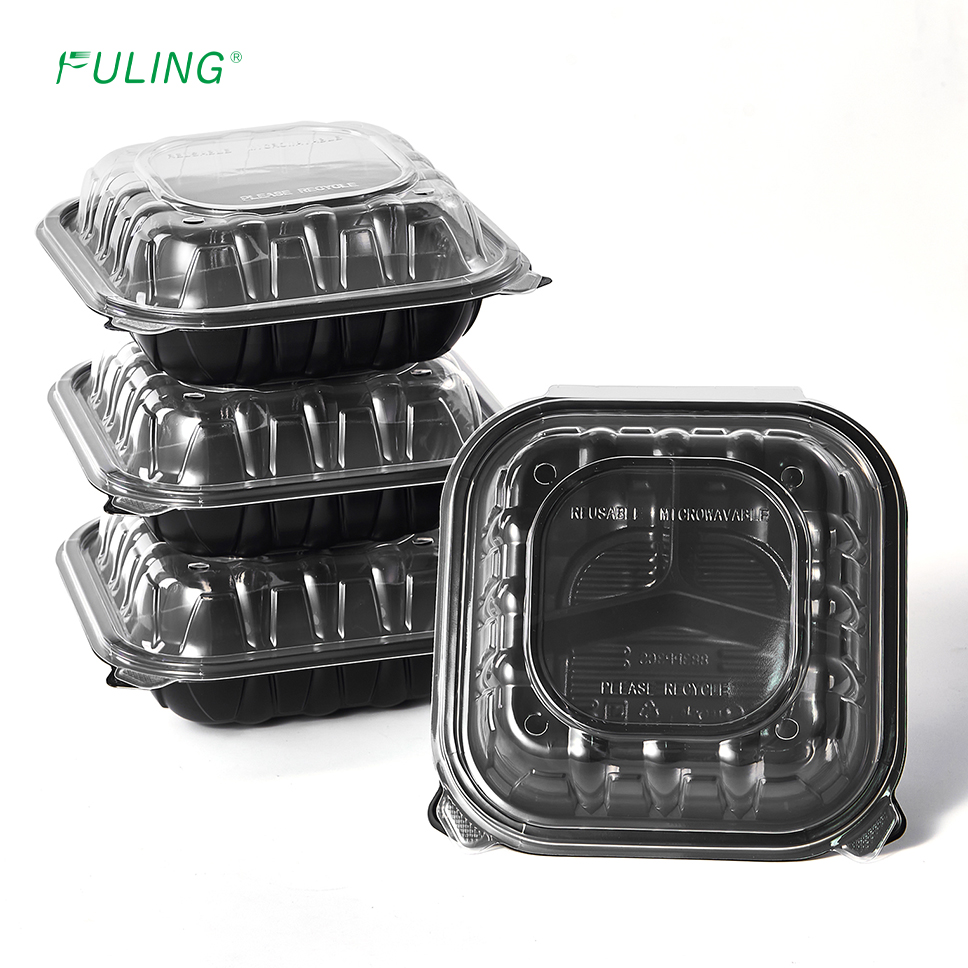
FULING Black Base Clear Hinged Lid Clamshell Container (8x8, 9x9, 9x6 Inch)
- Ultra-Clear OPS/PET High Visibility Lid
- Rigid Deep-Groove Stacking Deck
- Ideal for Retail Delis & Takeout
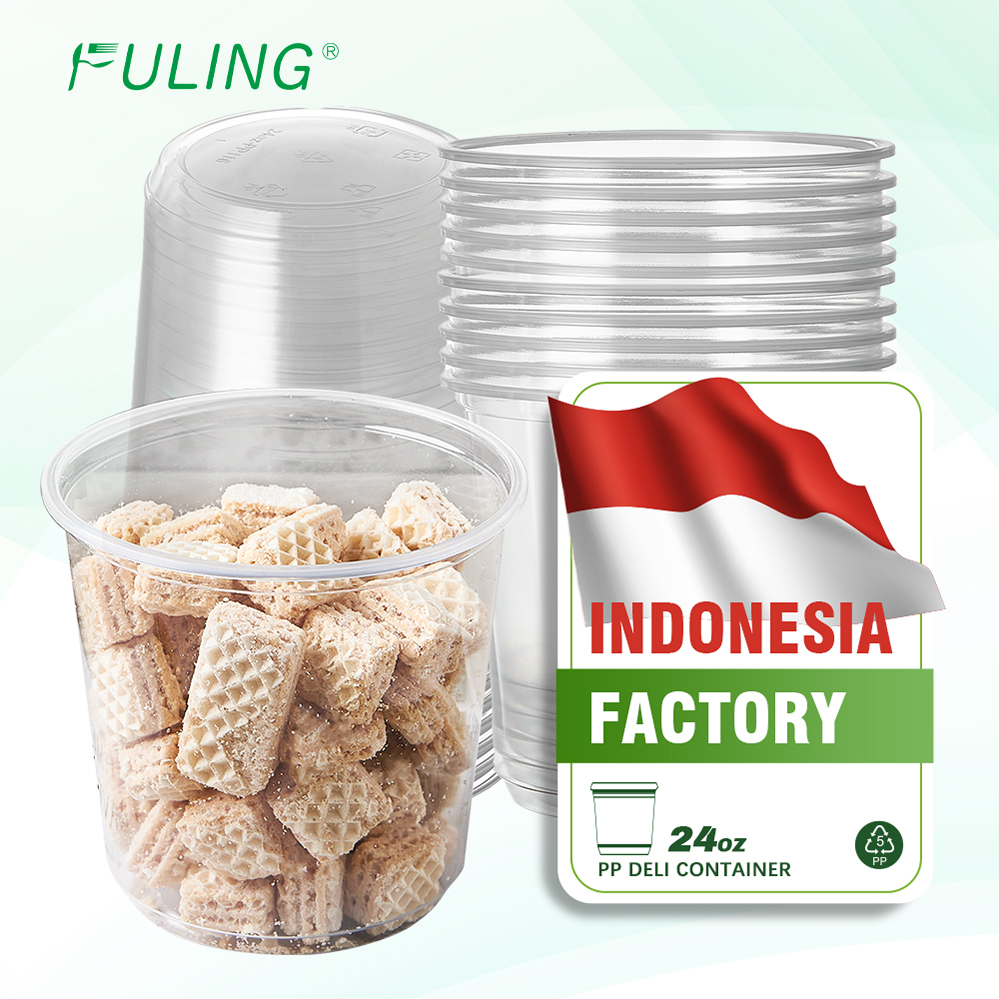
FULING 24 oz PP Round Deli Salad Container with Recyclable Lid (Indonesia Factory)
- Dual-Facility Sourcing (Tariff Relief)
- High Speed Injection Molded Wall
- Custom Logo Printing Supported
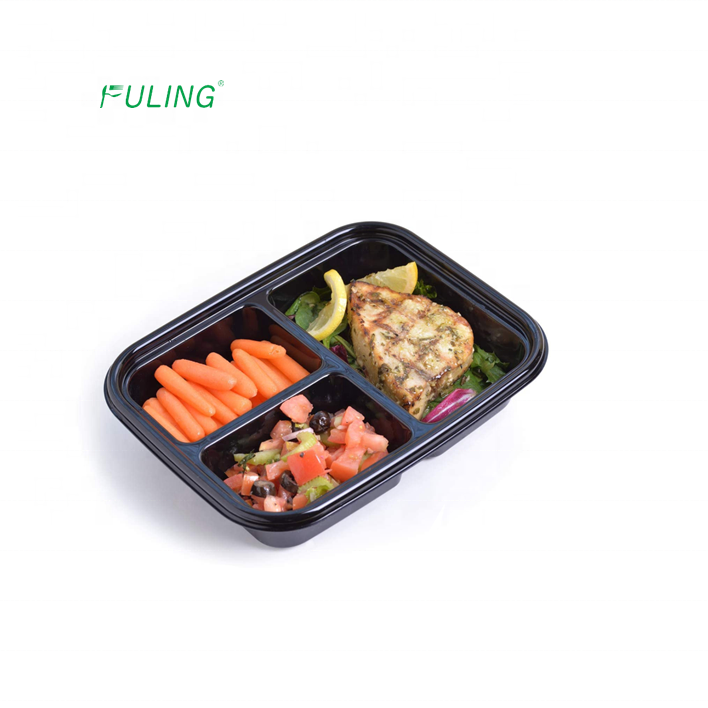
FULING Microwavable 3-Compartment Bento Meal Prep Box with Hermetic Lid
- Freezer to Microwave Operational Range
- Heavy-Duty Reuse-Grade Virgin PP
- Automated High-Density Carton Packing
The Paradigm Shift in CE Certified Paper Takeout Container Manufacturing
The global commercial food service industry is undergoing a structural transition. Driven by evolving legislative mandates—such as the European Union’s Single-Use Plastics Directive (SUPD), national PFAS-free regulations, and ESG-driven procurement protocols—global buyers, importers, and regional distributors are re-engineering their supply chains. Within this context, securing CE certified paper takeout containers from verified manufacturing factories and direct exporters is no longer simply an operational necessity; it is a vital competitive safeguard.
Achieving compliance in food-contact packaging requires navigating a complex matrix of material science, barrier chemistry, structural engineering, and regulatory auditability. European and international regulatory frameworks demand strict evidence of safety regarding total migration limits (OML), specific migration limits (SML), and heavy metal non-toxicity. This whitepaper provides procurement directors, supply chain executives, and wholesale importers with the technical, operational, and regulatory intelligence necessary to establish robust, risk-mitigated food packaging sourcing channels.
Regulatory Conformance
Verification of CE compliance, EU Regulation 10/2011, US FDA 21 CFR 176.170, and German LFGB food safety standards.
Barrier Innovation
Transitioning from legacy PE film lamination to biodegradable PLA biopolymers and fluorine-free aqueous dispersion coatings.
Supply Chain Resilience
Strategic dual-region manufacturing footprints (China + Indonesia) designed to mitigate geopolitical tariffs and freight risks.
Structural Integrity
High-caliper virgin kraft paperboard engineered for hot-fill thermal stability, stackable rigidity, and rim integrity.
Barrier Coating Technologies & Regulatory Verification
Paperboard, by its natural cellular composition, is hydrophilic and permeable to organic fats and liquids. To serve as a high-performance takeout box, soup container, or salad bowl, paper substrates require synthetic or bio-based barrier coatings. Historically, Polyethylene (PE) lamination dominated the B2B packaging landscape. However, current global regulatory pressure demands advanced alternative barrier chemistries.
Understanding the CE Mark in Paper Food Packaging
While the CE mark is traditionally associated with machinery, electronics, and medical devices under European New Approach Directives, in the context of food contact materials (FCM), CE Certification for Paper Takeout Containers signifies compliance with overarching European safety frameworks (specifically Regulation EC No 1935/2004 on materials intended to come into contact with food, and Good Manufacturing Practice Regulation EC No 2023/2006).
A legitimate exporter must produce a comprehensive Declaration of Compliance (DoC) supported by third-party testing from accredited laboratories (such as SGS, TÜV, or Intertek). Testing protocols evaluate:
- Overall Migration Limit (OML): Testing under 10 mg/dm² total migrant thresholds using food simulants (3% Acetic Acid, 10% Ethanol, Rectified Olive Oil / Iso-octane).
- Specific Migration Limits (SML): Verifying non-detection of photoinitiators, heavy metals (Pb, Cd, Hg, Cr VI), primary aromatic amines (PAAs), and residual monomers.
- Sensory Testing (DIN 10955): Ensuring the container transfers no organoleptic odor or taste alterations to the hot food content.
Comparative Matrix: Paper Takeout Container Barrier Technologies
Procurement managers must weigh barrier performance, heat resistance, cost, and end-of-life repulpability. The table below illustrates the material specs used across our certified factory lines:
| Coating Type | Material Composition | Heat Tolerance | Water / Oil Barrier | Recyclability & Composting | Regulatory Profile |
|---|---|---|---|---|---|
| PE Lamination (Single/Double) | Low-Density Polyethylene (15-20 gsm) | Up to 95°C | Excellent (KIT 12 / High Water Resistance) | Requires specialized hydro-pulper separation | FDA 21 CFR 177.1520; EU 10/2011 compliant |
| PLA Biopolymer | Polylactic Acid derived from cornstarch | Up to 40°C (Cold) / C-PLA up to 85°C | Good (KIT 8-10) | 100% Industrially Compostable (EN 13432 / BPI) | SUPD compliant in EU; Eco-tax exempt in select regions |
| Water-Based Dispersion (Aqueous) | Acrylic/Vinyl bio-dispersion polymers | Up to 100°C | High (KIT 10-12 / Oil Resistant) | Directly Repulpable in standard paper recycling mills | Zero-plastic under EU SUPD definitions (select formulations); PFAS-Free |
| Sugarcane Bagasse Fiber | Non-wood molded sugarcane bagasse pulp | -20°C to 120°C (Microwavable & Freezer Safe) | PFAS-free bio-resins (KIT 10) | Home & Industrial Compostable within 90 days | ASTM D6400 & EN 13432 Certified |
Future Procurement & Industry Development Trends (2025–2030)
Key shifts impacting international packaging procurement, import duty calculations, and structural packaging designs.
1. High-Efficiency Dispersion Coatings
Extrusion PE film lamination is rapidly being replaced by water-based polymeric dispersion coatings. This enables 100% repulpability in conventional paper mills, aligning with strict European circular economy packaging directives without sacrificing grease barrier performance.
2. Multi-Regional Production Resilience
To neutralize international tariff volatility (such as US Section 301 tariffs) and geopolitical shipping choke points, leading exporters are expanding operational footprints to include dual-country manufacturing networks (e.g., China + Southeast Asia/Indonesia factories).
3. Structural Anti-Sogging Geometries
With third-party delivery apps expanding global transit times, container design focuses heavily on moisture management. Micro-venting closures, embossed base ridges, and double-wall insulated folding structures prevent steam condensation from softening fried foods.
Why Global Importers Partner with Our Certified Facilities
Operating as a primary factory-direct manufacturer and global exporter, our operational architecture is optimized specifically for high-volume foodservice distributors, commercial chain operators, and regional brand owners.
State-of-the-Art Automated Production Lines
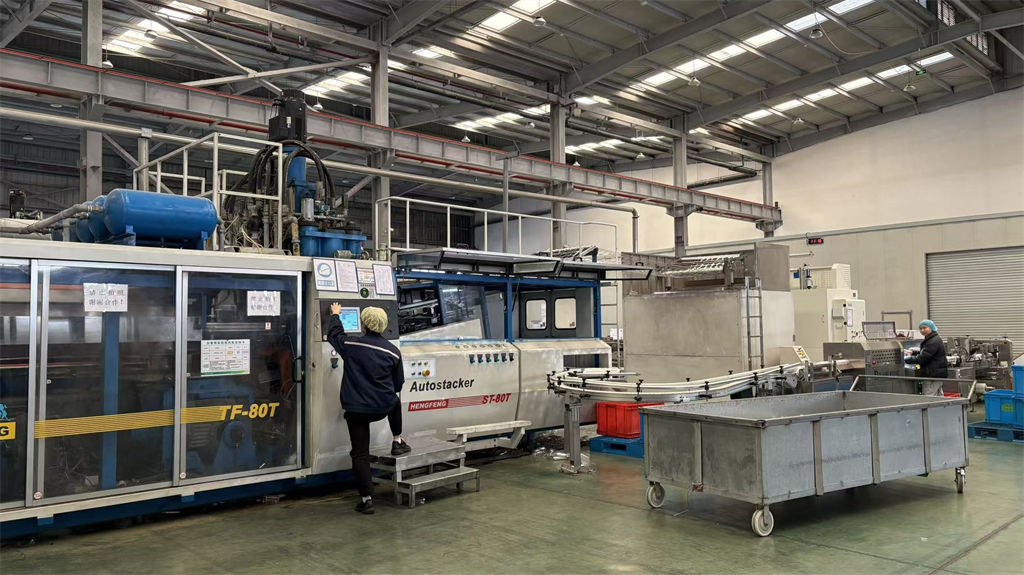
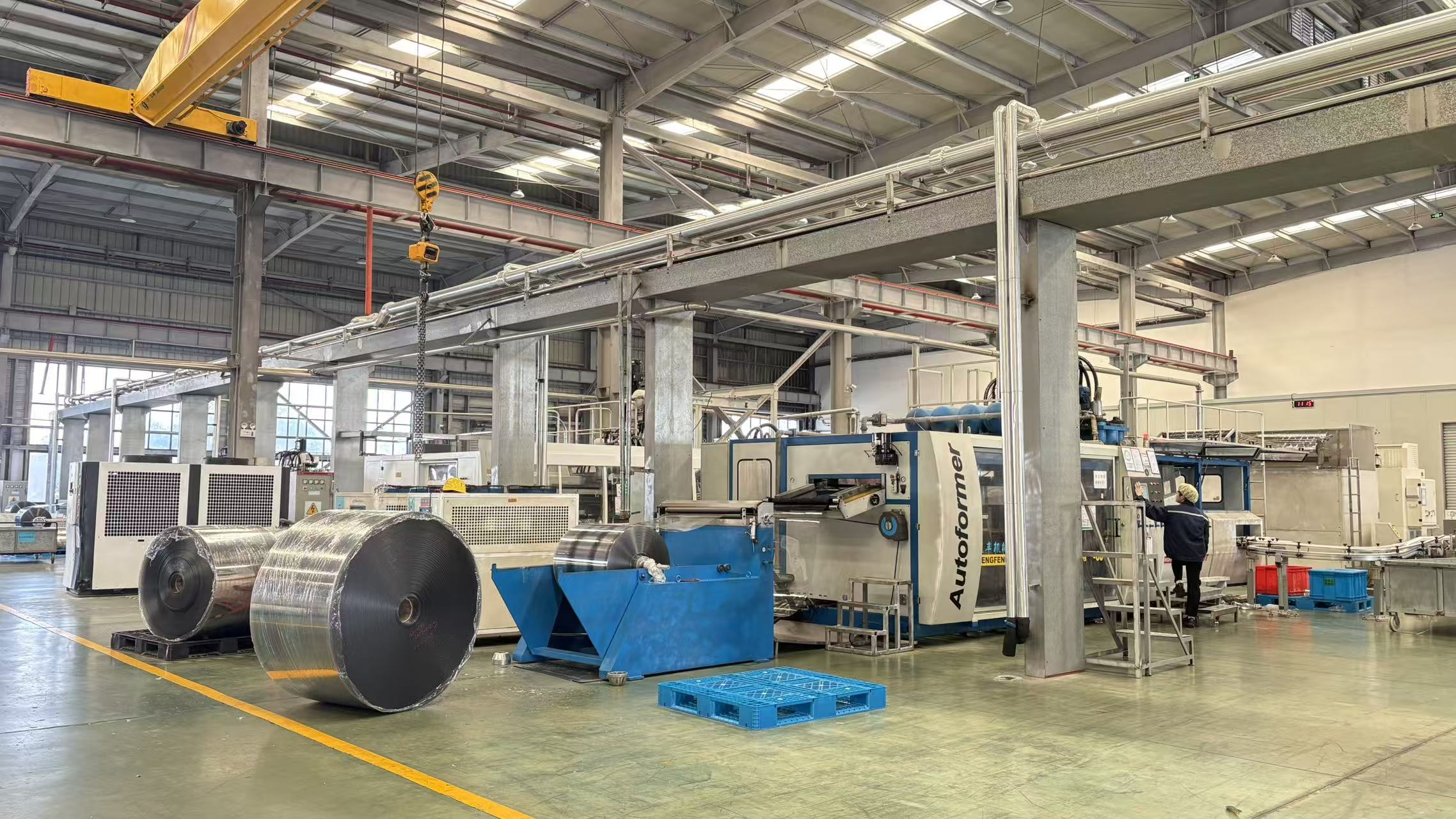
Our production ecosystem incorporates German high-speed paper cup forming machinery, fully automated thermoforming arrays, and robotic packaging cells. By maintaining zero human-touch workflows during thermoforming and cup sealing, we guarantee medical-grade hygiene across all food-contact SKUs.
- Continuous Inline Inspection: Optical AI vision systems inspect 100% of finished paper rims, side-seam welds, and bottom seals for pinhole defects.
- Rigid Weight & Caliper Control: Automatic gram-weight sensors ensure uniform paperboard thickness and consistent rim rolled geometry.
- Consolidated Container Optimization: Our logistics engineering team configures custom loading profiles, nesting paper containers inside plastic lids to maximize container cubic utilization by up to 28%.
Full OEM/ODM Private Label Programs
We support high-definition 8-color flexographic and offset water-based ink printing. From custom die-cut dimensions to custom barcode cartoning and retail inner-sleeve packaging, we build turnkey private-label product lines.
Stringent Quality Assurance (AQL 1.0/2.5)
Every production lot undergoes rigorous laboratory testing before release: rim crush tests, hot-oil hold out tests (4 hours at 90°C), microwave exposure trials, and drop-impact resistance tests.
Frequently Asked Procurement Questions
Direct answers to technical, regulatory, and logistics inquiries commonly raised by B2B import specialists.
Connect Directly with Our OEM Export Engineers
Request comprehensive product catalogs, third-party CE food-contact test dossiers, custom printing quotations, or sample evaluation kits. Fast 24-hour response guaranteed for B2B buyers.