Featured Commercial Product Lineup
Engineered for food safety, oil resistance, and thermal tolerance. Compatible with high-speed commercial packaging and food-service delivery platforms.

Strategic Evaluation of Sugarcane Bagasse Food Containers Manufacturing in China
The global quick-service restaurant (QSR), commercial catering, and retail packaging sectors are undergoing a structural shift driven by single-use plastic prohibitions, Extended Producer Responsibility (EPR) compliance models, and shifting consumer expectations. Amid this transition, sugarcane bagasse food packaging—manufactured from the fibrous residue remaining after sugarcane crushing—has established itself as the leading plant-based replacement for expanded polystyrene (EPS) and traditional polypropylene (PP) food containers.
China has developed into the global center for bagasse pulp molding engineering, automated thermoforming technology, and high-volume export logistics. Driven by localized raw material processing clusters, precise tooling capabilities, and advanced PFAS-free barrier chemistries, premier Chinese manufacturers deliver scalable packaging solutions that fulfill strict regulatory demands across North America, Europe, and the Asia-Pacific region.
Technical Information Gain Signal: Unlike wood-pulp-based paperware, sugarcane bagasse utilizes an agricultural byproduct requiring zero dedicated land clearing. Fiber morphology reveals short, high-density cellulose interlock networks (fiber length: 1.0–1.7 mm) that yield structural rigidity under compression load up to 450N without synthetic polymer reinforcement.
For enterprise procurement officers, institutional food-service distributors, and private-label brand owners, sourcing from China's top bagasse container manufacturers offers a strategic balance of cost structure, technical compliance, and rapid mold customization. However, navigating product grades, chemical barrier formulations (PFAS-free vs. fluorinated), and thermal stability ranges demands an engineering-led approach to supplier evaluation.
Structural Dynamics & PFAS-Free Chemistry in Bagasse Manufacturing
The production of commercial bagasse tableware relies on refined thermoforming processes. Raw bagasse pulp is hydrated, mechanically refined to optimize freeness (Canadian Standard Freeness 350-450 CSF), blended with eco-friendly oil/water repellents, and molded under high pressure (8-12 tons per platen) and elevated temperatures (180°C–220°C).
The Next-Generation Barrier Matrix (Fluorine-Free Innovations)
In response to US State bans (such as California AB 1200 and Washington HB 1219) and European Union REACH regulations restricting per- and polyfluoroalkyl substances (PFAS), leading Chinese manufacturers have converted production lines to 100% PFAS-Free Bio-based Coatings.
Aqueous Acrylic Coatings
Formulated from water-dispersed polymer emulsions, creating a continuous thin-film moisture barrier capable of resisting hot liquids up to 95°C without structural softening.
Bio-Polyester (Bio-PBS/PLA) Lamination
Direct extrusion or film-bonding of compostable polybutylene succinate (PBS) providing absolute grease-proofing (Kit Rating 12) for high-grease, high-sauce applications.
Cross-linked Starch Complex
Enzymatically modified cassava/corn starch additives mixed directly in pulp slurry to deliver internal grease repellency while retaining 100% home compostability.
Engineered Bagasse Container Specification Matrix
The table below provides technical performance parameters across core commercial product classifications. These metrics serve as standard benchmarks during factory quality audits and container lot inspections.
| Product Category | Gram Weight Range (g) | Thermal Resistance Range | Oil Resistance (95°C / 30 min) | Compostability Standard | Typical B2B Applications |
|---|---|---|---|---|---|
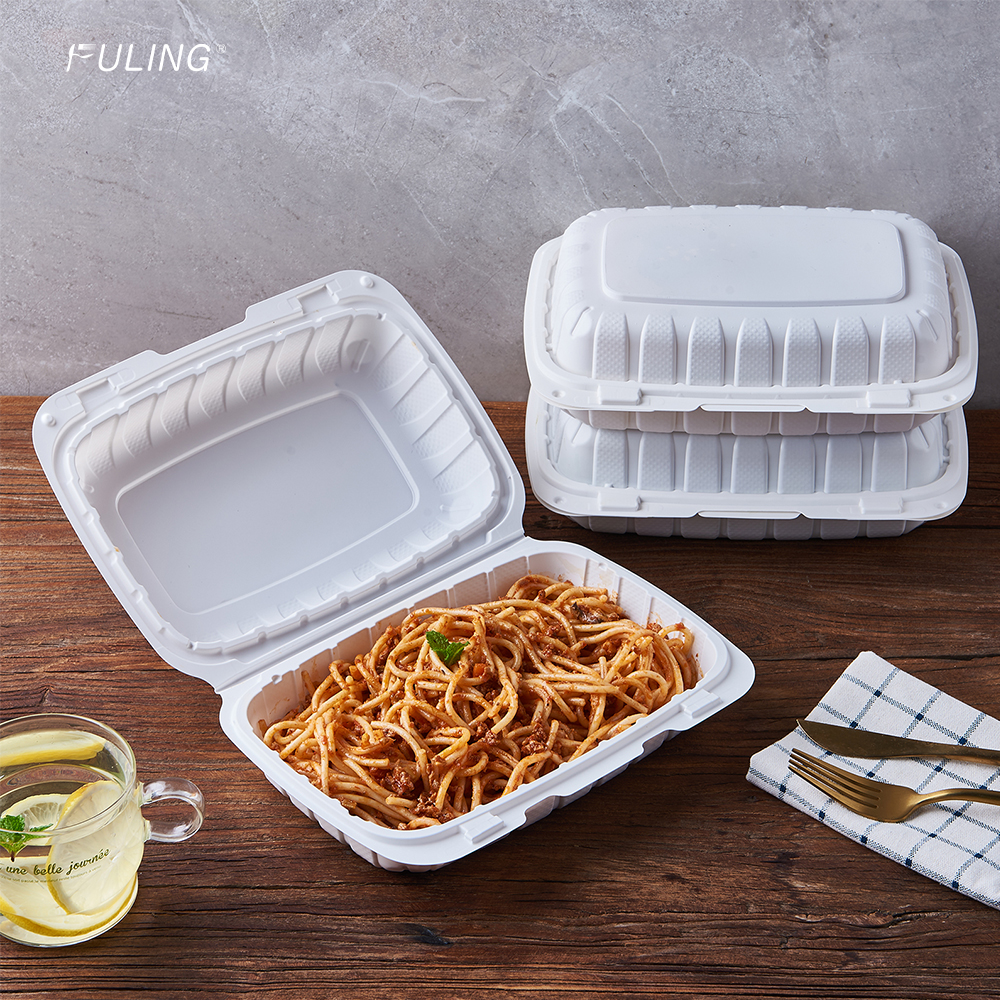
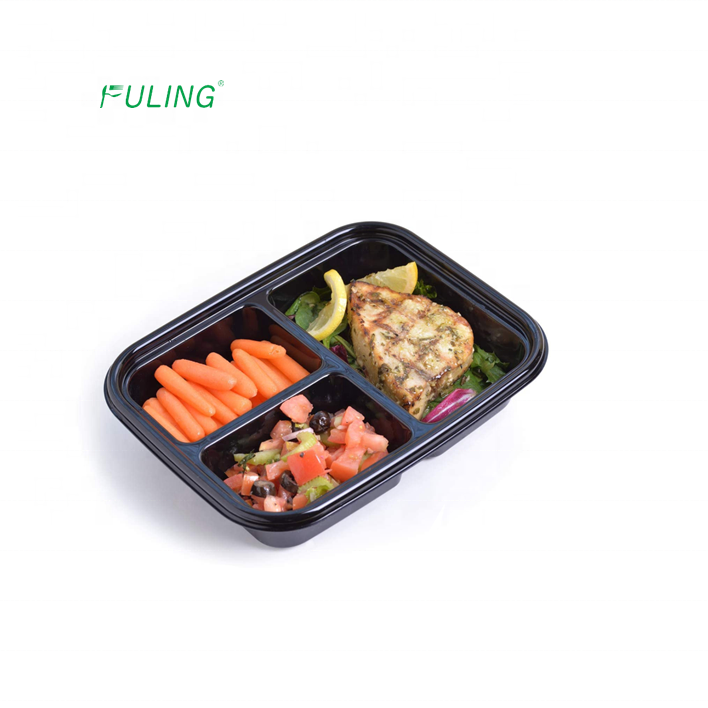
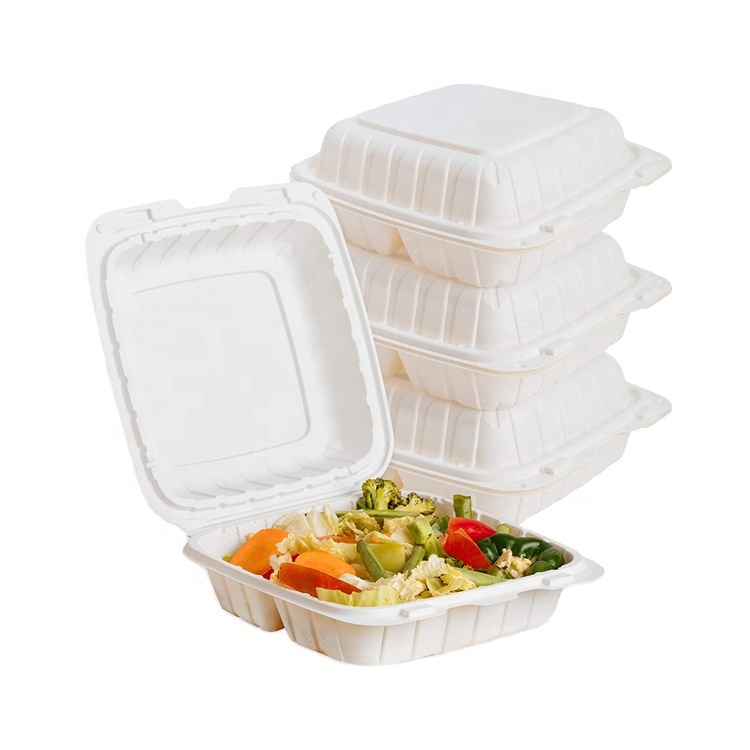
| Hinged Clamshells (1-3 Comp) | 22g – 48g | -20°C to 120°C | Pass (Kit Level 10-12) | ASTM D6400 / EN 13432 | Takeout Entrees, Burgers, Delivery Meals |
| Deep Soup/Salad Bowls (12-32 oz) | 14g – 32g | -18°C to 100°C | Pass (Hydrophobic Aqueous) | OK Compost Home / BPI | Hot Soups, Ramen, Grain Bowls, Salad Bars |
| Portion Sauce Cups (1-4 oz) | 3.5g – 8g | -10°C to 90°C | Pass (Oleophobic Internal) | Industrial & Home Compost | Dipping Sauces, Condiment Kits, Samples |
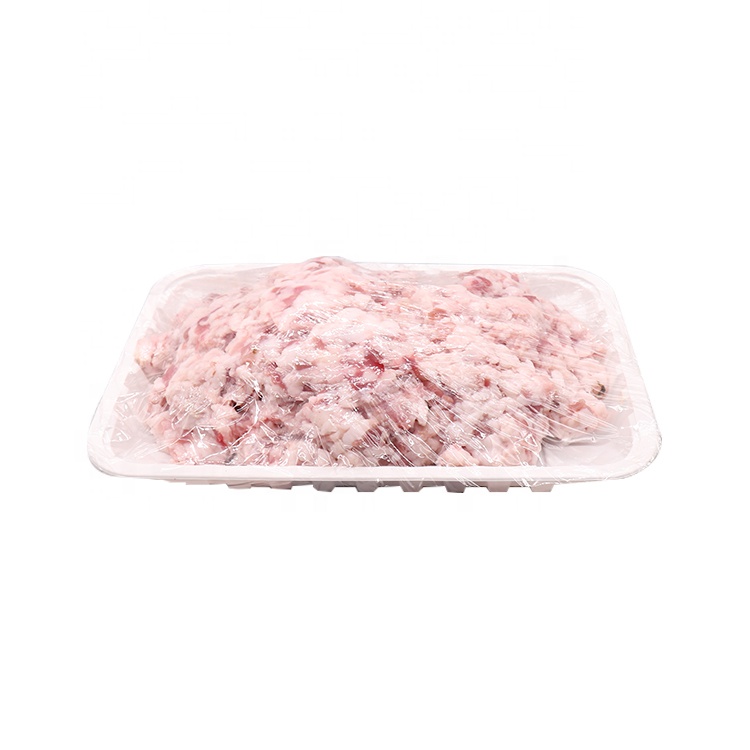
| Compartment Meat & Deli Trays | 18g – 40g | -30°C to 80°C | Pass (Laminated Barrier) | Biodegradable / Recyclable | Fresh Meat Packing, Supermarket Deli |
| Heavy-Duty Platter Plates (7-10 inch) | 12g – 26g | -15°C to 110°C | Pass (Standard Surface Treatment) | EN 13432 Certified | Institutional Catering, Events, Buffets |
OEM/ODM Manufacturing Infrastructure & Supply Chain Authority
Building a resilient B2B food packaging program requires a manufacturing partner with deep expertise in material science, rapid prototyping, and automated production. Partnering with top Chinese bagasse manufacturers provides key structural advantages:
In-house CNC mold-making departments accelerate product development cycles. Custom embossed logos, custom volume capacities, and specialized sealing rim geometries can move from 3D CAD rendering to physical production-grade sample testing in as little as 10 to 14 business days.
Every production batch undergoes strict quality control protocols, including automated optical detection for pinhole defects, side-wall buckling tests, lid-seal leak detection, and heavy metal atomic absorption testing compliant with US FDA 21 CFR 176.170 and EU Regulation 1935/2004.
Automated stackers optimize nesting ratios, reducing outer carton volume by up to 18% compared to standard manual packing. High-density corrugated export cartons (5-ply K=K with moisture-barrier PE liners) protect against ocean container humidity during transit.
Global Sourcing Trends & Regulatory Outlook (2025–2030)
As global environmental mandates evolve, international buyers must align their procurement strategies with multi-regional policy shifts. Sourcing bagasse packaging requires evaluating three major industry trends:
1. Expansion of Extended Producer Responsibility (EPR) Schemes
Governments across North America and the EU are shifting waste management cost burdens directly onto food-service brand owners. Certified compostable sugarcane bagasse containers reduce fee exposure under EPR programs due to their organic recovery compatibility, avoiding the heavy financial surcharges levied on virgin fossil-fuel plastics.
2. Transition to Home-Compostable Formulations (OK Compost Home)
While industrial composting infrastructure remains under development in many markets, consumer demand is accelerating toward Home Compostable Bagasse Tableware. Modern bagasse formulas eliminate synthetic binding agents, allowing products to degrade fully within ambient garden soil (20°C–30°C) within 90 to 180 days without requiring industrial composting facilities.
3. Carbon Accounting & Life Cycle Assessment (LCA) Transparency
Enterprise buyers increasingly require full ISO 14040/14044 compliant Life Cycle Assessments. Sugarcane bagasse presents a favorable Scope 3 emissions profile: manufacturing utilizing green bio-energy generated from bagasse combustion in sugar mills can achieve near-neutral net carbon output from cradle to gate.
Frequently Asked Questions for B2B Importers
Direct technical answers to common questions raised by procurement managers, factory auditors, and supply chain directors.
Request Full Commercial Catalog & Engineering Specifications
Connect directly with our international sales and technical engineering support team. Receive product samples, compliance certificates, and competitive direct FOB/CIF container pricing.
Get Catalog