Executive Industry Report: Sourcing Microwave Safe Food Containers from China
The global commercial food packaging sector is undergoing a profound structural shift. Driven by worldwide legislative phase-outs of expanded polystyrene (EPS) foam, booming online meal delivery networks, and shifting consumer preferences toward reheatable food containers, enterprise B2B buyers—including foodservice distributors, supermarket chains, and commercial packaging importers—are evaluating supplier manufacturing capabilities under strict technical scrutiny. Selecting a qualified China Wholesale Microwave Food Containers Supplier & Suppliers requires an in-depth understanding of polymer material science, thermal dynamics, structural engineering, and food-contact regulatory frameworks.
In modern commercial takeout systems, a container is no longer merely a holding vessel; it is a thermal barrier, a leak-proof transport box, and a critical brand touchpoint. When end consumers reheat meals in microwave ovens, packaging integrity is put to the test. Polymer degradation, chemical leaching, structural collapsing, and lid pop-offs under thermal pressure represent major risk factors for food brands. China’s leading manufacturing infrastructure has evolved from basic mass commodity extrusion to advanced multi-layer co-extrusion, high-precision thermoforming, and mineral-filled polymer compounding, offering global buyers unprecedented structural performance, cost efficiency, and eco-compliance.
SEO & Information Gain Insight: Genuine commercial value in microwave container sourcing stems from balancing resin melt flow index (MFI), Heat Deflection Temperature (HDT), mineral loading percentages, and stackability strength under high-moisture conditions.
Technical Benchmark: Polymer Matrix Comparison for Microwave Applications
Understanding material characteristics is essential when auditing a China wholesale microwave food container factory. The table below delineates the physical, thermal, and economic properties of primary food-grade substrates used across modern takeout packaging lines:
| Material Substrate |
Heat Deflection Temp (HDT) |
Microwave Safety |
Cold Resistance (-20°C) |
Resin Reduction Factor |
Primary Commercial Use |
| Virgin Polypropylene (PP) |
100°C – 120°C |
Excellent (High Stability) |
Good (Impact Modified) |
Baseline (0%) |
Meal Prep Containers, Deli Tubs, Heavy Bowls |
| Mineral-Filled PP (MFPP) |
110°C – 130°C |
Superior (Low Expansion) |
Excellent |
30% – 50% Natural Minerals |
Hinged Clamshells, Togo Bento Boxes, Trays |
| Sugarcane Bagasse |
95°C – 100°C |
Good (Short Duration) |
Moderate (Moisture Sensitive) |
100% Plant Fiber |
Compostable Eco-Plates, Clamshells |
| PET (Polyethylene Terephthalate) |
65°C – 70°C |
Unsafe (Warp Hazard) |
Superior |
Baseline (0%) |
Cold Beverage Cups, Salad Domes, Portion Lids |
Future Procurement Trends in Microwave Food Containers (2025–2030)
As international supply chains recalibrate to meet stringent carbon reduction targets and zero-foam bans across North America, Europe, and the Middle East, enterprise procurement directors must align their purchasing strategies with emerging engineering trends. China's top tier suppliers are pioneering innovations that combine material efficiency with high thermal resilience.
1. High-Content MFPP Adoption
Mineral-Filled Polypropylene (MFPP) incorporating 30% to 50% natural calcium carbonate ($CaCO_3$) or talc is fast replacing standard PP. It drastically cuts virgin plastic consumption, lowers carbon footprints, and enhances structural rigidity under hot conditions.
2. Anti-Fog & Steam Venting Lids
High-end microwave delivery containers are increasingly specified with anti-fog treated, high-clarity PP or vented lids. Internal surfactant coatings prevent condensation buildup, preserving product visibility and preventing steam-induced soggy food.
3. Nested Logistics & Freight Optimization
With ocean freight volatility remaining a strategic concern, modern container designs prioritize ultra-high nesting ratios. Engineered sidewall draft angles allow up to 30% more units per 40HQ container, lowering shipping cost per unit significantly.
Deep Dive: Material Engineering & Sustainable Development Trends
The technical evolution of microwave-safe food containers revolves around chemical stability, polymer formulation, and end-of-life recyclability. Enterprise buyers working with a China Wholesale Microwave Food Containers Supplier must navigate complex material science parameters to ensure product safety across diverse culinary applications.
1. Thermal Rheology & Isothermal Crystallization in PP Formulations
Polypropylene is inherently semi-crystalline. When subjected to microwave radiation, electromagnetic waves interact with polar molecules in food (primarily water and fats), rapidly elevating temperatures up to 100°C–120°C. Standard low-grade PP can experience thermal softening or localized melting when in contact with high-temperature oils. Chinese chemical compounders now utilize high-isotactic homopolymer and random copolymer blends enriched with nucleating agents. This increases crystallization temperatures, shortens molding cycle times, and boosts Heat Deflection Temperatures (HDT) past 120°C, preventing container deformation during high-wattage microwave heating.
2. Mineral Fillers ($CaCO_3$ / Talc) & Environmental Economics
Incorporating micro-particulate calcium carbonate or natural talc into the PP polymer matrix accomplishes two distinct engineering goals. First, it acts as a physical heat sink, improving thermal conductivity and dimensional stability. Second, it reduces dependence on fossil-fuel-derived virgin resins, serving as a primary pathway for food brands to achieve corporate ESG goals without compromising meal delivery performance.
Structural Integrity Under Hot Stacking
Traditional thin-wall plastic containers soften under hot food loads, causing stacks to collapse during transit. MFPP formulations maintain top-load strength even when filled with piping-hot soups or gravies at 95°C.
Perimeter Double-Snap Latching Seals
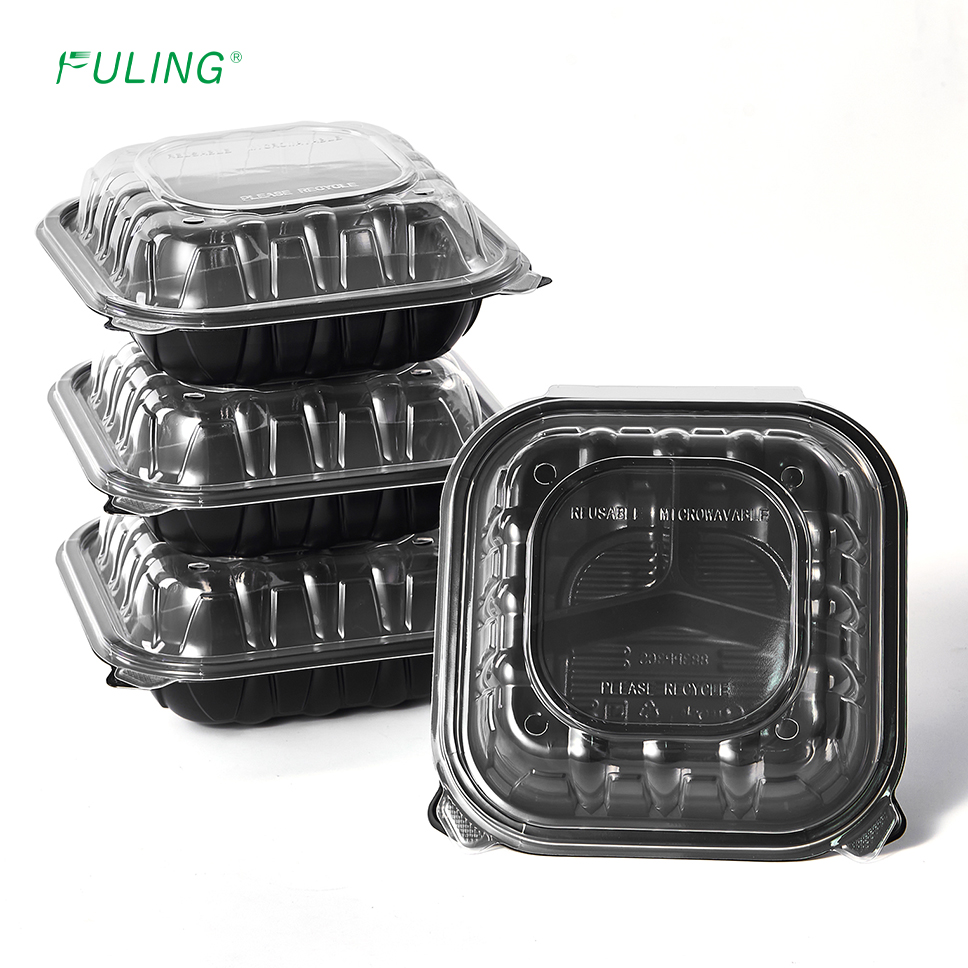
Engineering perimeter locking channels ensures zero liquid leakage during motorcycle delivery over rough urban terrain. Secure tactile click snaps provide immediate feedback to kitchen assembly staff.
Factory OEM/ODM Capabilities & Quality Management Framework
Partnering with an established manufacturing enterprise in China provides critical supply chain stability for global importers, foodservice brand owners, and distributor networks. Production operations are backed by rigorous international quality certifications and state-of-the-art automated equipment.
1. Automated Cleanroom Injection & Thermoforming Infrastructure
Our manufacturing facilities operate high-speed, fully automated injection molding machines and continuous thermoforming lines equipped with Robotic Arm Take-Out Systems. By automating product extraction and stacking inside dust-free, environmentally controlled workshops, manual contact is virtually eliminated, guaranteeing superior hygiene standards for food-contact packaging.
2. Comprehensive International Food-Contact Compliance
Compliance is non-negotiable for enterprise importers. Every batch of microwavable containers undergoes comprehensive third-party laboratory testing against rigorous global standards:
- US FDA 21 CFR 177.1520: Verified overall and specific migration limits for olefin polymers in contact with aqueous, fatty, and acidic foods.
- EU Regulation (EU) No 10/2011 & LFGB: Rigorous testing for heavy metals, volatile organic compounds (VOCs), and primary aromatic amines.
- BRCGS Global Standard for Packaging Materials: Certified hygiene management systems guaranteeing complete lot traceability from raw resin to finished shipping carton.
3. OEM Customization, Tooling, & Rapid Prototyping
From initial 3D CAD modeling and rapid SLA prototyping to precision CNC mold construction, our engineering team supports custom container dimensions, compartment layouts, embossed brand logos, and custom color matching (Pantone). In-house mold fabrication reduces development lead times from months to weeks, enabling rapid commercialization of proprietary packaging designs.
Frequently Asked Questions (FAQ) for Global Buyers
Explore authoritative answers to common procurement, technical, and regulatory questions regarding wholesale microwavable food container sourcing.
What makes Polypropylene (PP) and MFPP safe for microwave heating?
Polypropylene (PP) possesses a high melting point (typically 160°C to 165°C) and a High Heat Deflection Temperature (HDT), allowing it to withstand hot food temperatures up to 120°C without melting, leaching harmful chemicals, or structural softening. Mineral-Filled Polypropylene (MFPP) adds natural calcium carbonate to further increase thermal stability, reduce resin expansion, and enhance container rigidity during microwave reheating.
How does MFPP packaging compare with Sugarcane Bagasse in terms of cost and performance?
While Sugarcane Bagasse offers 100% compostability, it can absorb oils and moisture over extended heating times, leading to softening. MFPP provides superior oil, grease, and liquid barrier performance, higher top-load stacking strength, and complete moisture resistance at a significantly lower unit cost, making it the preferred commercial option for heavy meal delivery and long-distance transport.
Can you supply anti-fog clear lids for microwave containers?
Yes. We supply high-clarity PP and anti-fog treated lids engineered to maintain crystal-clear visibility when hot food steam condenses inside the container. Vented lid designs are also available to release excessive steam pressure during microwave cycles.
What food safety and regulatory testing reports do you provide for customs clearance?
We provide full FDA 21 CFR 177.1520 compliance certificates for North American buyers, EU 10/2011 and LFGB test reports for European markets, as well as heavy metal and overall migration test documentation. ISO 9001 and BRCGS factory inspection credentials are also supplied.
What is the typical lead time and Minimum Order Quantity (MOQ) for custom OEM orders?
Standard stock items carry an MOQ of 30,000 to 50,000 sets (or 100–200 cartons depending on unit size). Custom logo-printed or custom-colored containers generally require 50,000 units. Production lead times average 15 to 25 days following proforma deposit and sample confirmation.
Can I consolidate multiple packaging SKUs into a single 40HQ container shipment?
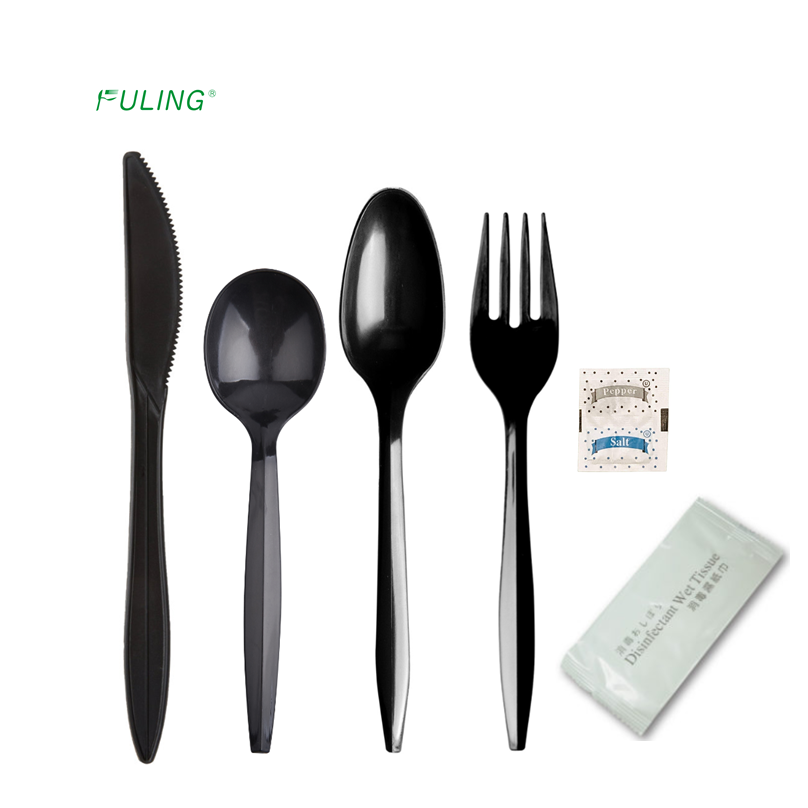
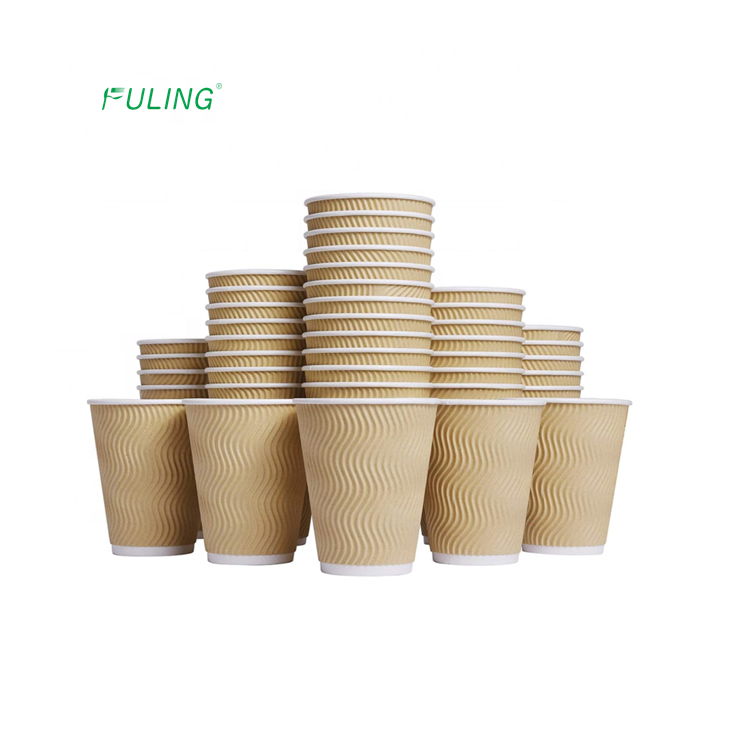
Yes. We frequently build consolidated mixed-container orders combining microwavable meal prep boxes, hinged MFPP clamshells, paper coffee cups, deli soup containers, and wrapped cutlery kits. Our logistics team calculates volumetric carton packing and pallet loading to maximize freight utilization.