Featured Food Grade Packaging SKUs
Factory-direct OEM/ODM plastic fruit punnets, clamshells, micro-perforated produce trays, and commercial takeaway solutions compliant with US FDA and EU food safety standards.

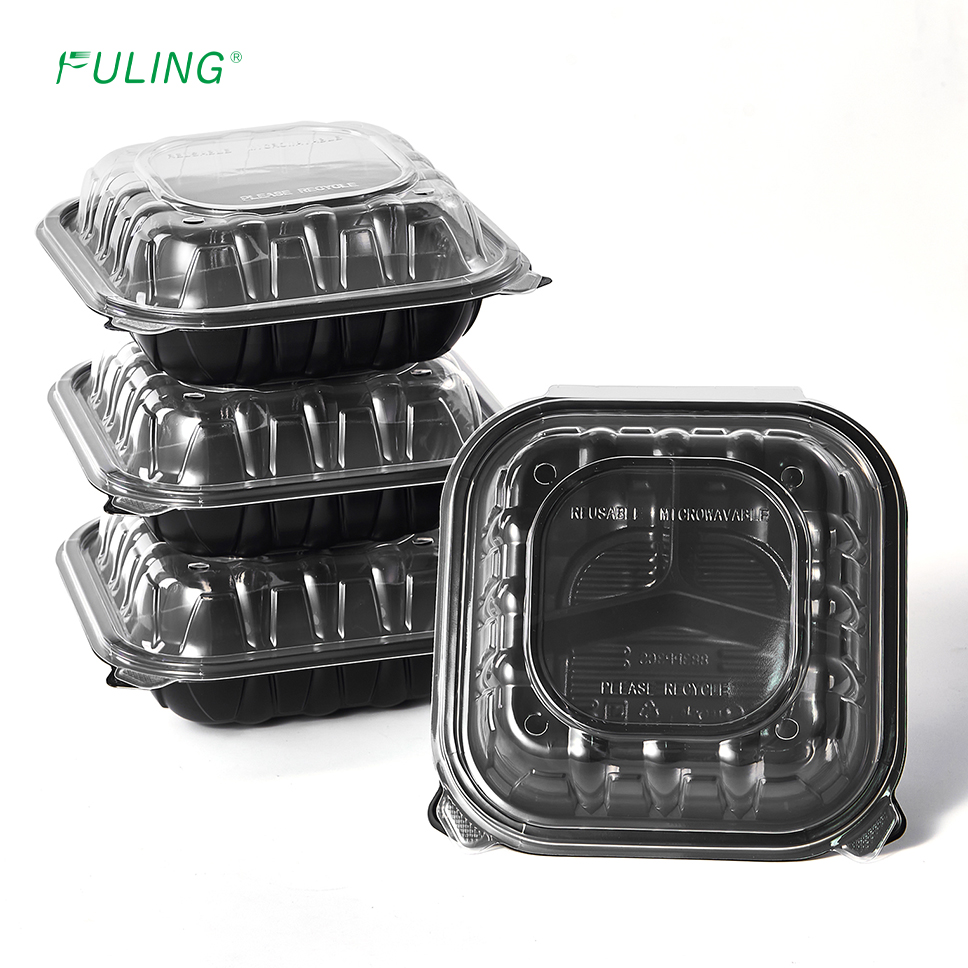



Executive Industry Report: Technical Architecture of OEM Plastic Fruit Packaging
In modern agricultural cold chains and commercial retail environments, fruit packaging serves far beyond a passive containment vessel. It acts as an active physical and micro-environmental barrier engineered to minimize metabolic respiration rates, arrest desiccation, mitigate mechanical deformation, and preserve the organoleptic properties of high-value produce. As a premier Custom OEM Plastic Fruit Containers Manufacturer & Factory, our engineering matrix integrates material science, precise thermodynamic thermoforming, and post-consumer recycled (PCR) circular economy compliance.
Fresh fruit commodities—such as blueberries, table grapes, strawberries, cut melons, and cherry tomatoes—exhibit post-harvest metabolic respiration. This process consumes stored sugars and releases water vapor, ethylene gas, and carbon dioxide. Unregulated internal micro-climates inside a rigid container trigger condensate accumulation, fostering fungal pathogen spores such as Botrytis cinerea. Custom OEM manufacturing addresses these specific physiological challenges through modified atmosphere perforation patterns, anti-fog surfactant coatings, structural load-bearing rib designs, and hermetic perimeter locking mechanisms.
Core Engineering Pillars in Custom Fruit Container OEM
Structural Rigidity & Stacking Integrity
Engineered corner pillars and side-wall ribbed channels withstand top-load compressive stresses during multi-tier cold storage palletization, preventing fruit bruising.
Airflow & Vent Ventilation Systems
Custom laser-cut and die-punched ventilation slots engineered according to specific commodity transpiration dynamics to facilitate rapid forced-air cooling.
Optical Clarity & Anti-Fog Tech
Food-contact compliant co-extruded anti-fog surfactants eliminate condensation beads, ensuring crystal-clear retail presentation under refrigerated display units.
Polymers & Material Selection for OEM Fruit Container Fabrication
Selecting the optimal polymer resin is a critical financial and functional engineering decision for commercial fruit growers, packing houses, and retail chains. Our manufacturing facilities operate high-speed multi-layer co-extrusion lines and thermoforming stations handling Virgin PET, rPET (Post-Consumer Recycled Polyethylene Terephthalate), Polypropylene (PP), and Mineral-Filled Polypropylene (MFPP).
| Polymer Resin Type | Optical Transparency | Thermal Range (°C) | Recyclability Grade | Primary Produce Applications | Structural Strengths |
|---|---|---|---|---|---|
| PET (Polyethylene Terephthalate) | High Clarity (>90%) | -40°C to 60°C | RIC #1 (Highly Recyclable) | Berries, Cherries, Cut Fruit Cups, Grapes | Superior tensile strength, exceptional barrier to gas/moisture, high impact resistance. |
| rPET (100% Food-Grade PCR) | High Clarity (85%-90%) | -40°C to 60°C | RIC #1 (Circular Economy) | Organic Produce, Sustainable Retail Lines | EFSA & FDA certified recycled resin, identical mechanical properties to virgin PET, reduced carbon footprint. |
| PP (Polypropylene) | Translucent / Opaque | -20°C to 120°C | RIC #5 (Recyclable) | Microwavable Meal Prep, Hot-fill Fresh Deli, Cut Produce | Microwave safe, superior chemical resistance, high flexural fatigue life (living hinges). |
| MFPP (Mineral-Filled PP) | Opaque Matte | -20°C to 120°C | RIC #5 (Hybrid Fill) | Heavy Produce, Foodservice Takeout, Bulk Punnets | Natural mineral content reduces virgin plastic consumption by 40-50%, enhanced stiffness and heat insulation. |
Precision OEM Customization Matrix
Our industrial OEM design workflow delivers comprehensive customization tailored to high-speed automated packing lines:
- Dimensional & Volumetric Customization: Volumetric configurations ranging from 125g, 250g, 500g, 1kg punnets up to multi-liter commercial produce clamshells, engineered to match standardized ISO shipping pallets (1200x1000mm and 1200x800mm) without surface footprint waste.
- Hinged vs. Separate Snap-Lid Mechanisms: Precision tooling for button-lock clamshell closures, friction-fit perimeter lids, and automated heat-sealing film rim contours for modified atmosphere packaging (MAP).
- Denesting Features for Automated Packing: Specially designed side-wall denesting lugs prevent vacuum interlocking when containers are stacked, allowing ultra-smooth automated destacking on high-speed agricultural sorting lines.
- Direct In-Mold Labeling (IML) & Embossing: High-precision logo embossing on lids, barcode labeling, and high-definition IML branding resistant to cold-chain moisture absorption.
Global Procurement Trends: 2025–2030 Fresh Produce Packaging Roadmap
The global fresh produce packaging ecosystem is undergoing a structural paradigm shift driven by stringent international environmental regulations, retail supply chain automation, and shifting consumer expectations regarding sustainability. Global buyers, agricultural co-operatives, and packaging importers must align procurement strategies with these macro trends:
1. Mandated PCR Material Thresholds
Legislative frameworks such as the EU Single-Use Plastics Directive and US state-level Extended Producer Responsibility (EPR) mandates are requiring minimums of 25%-30% post-consumer recycled (rPET) content in rigid produce packaging. OEM manufacturing must utilize EFSA/FDA decontamination technology to supply food-grade certified rPET containers without color yellowing or structural degradation.
2. Transition to Monomaterial Design
To eliminate recycling stream contamination, multi-material packaging (such as plastic clamshells with unseparable paper labels or metal fasteners) is rapidly being phased out. The industry standard has converted to monomaterial PET or PP construction where lids, bases, and functional labels belong to the same resin family, maximizing end-of-life kerbside collection efficiency.
3. Lightweighting via Structural Rib Engineering
Advancements in Finite Element Analysis (FEA) computer simulation allow container walls to be thinned by up to 15% without sacrificing vertical stack strength. By strategically orienting perimeter ribs and base geometry, manufacturers reduce raw material weight, lowering ocean freight tariffs and carbon transport emissions per unit.
Factory Competence: Industrial OEM/ODM Infrastructure
Our manufacturing complex represents state-of-the-art polymer processing capabilities. Equipped with fully automated German and Japanese thermoforming machines, robotic stackers, and centralized material feeding systems, we guarantee zero-defect production runs across high-volume contract orders.
Cleanroom Hygiene Protocol
Production facilities are structured around dust-free cleanroom environments complying with ISO 14644-1 standards, preventing airborne particulates from contaminating food-contact surfaces during high-temperature thermoforming and nesting.
Integrated Quality Assurance (QA/QC)
Every production batch undergoes automated inline optical camera inspections for wall thickness uniformity, pinhole detection, rim dimensional accuracy, and mechanical snap-lock verification under simulated load pressures.
Global Compliance & Certifications
Full compliance documentation is provided with every shipment: US FDA 21 CFR 177.1630, EU Regulation 10/2011, BRCGS Packaging Issue 6, ISO 9001, ISO 14001, and SGS/TÜV material safety audit reports.
B2B Procurement FAQ: Custom OEM Fruit Packaging
Direct technical insights for packaging buyers, agricultural exporters, and commercial distributors.
For standardized stock sizes with custom branding or perforation changes, our typical MOQ starts at 50,000 units. For fully customized container geometries requiring new CNC aluminum tooling molds, the standard production MOQ is 100,000 units per item. Mixed SKU container consolidation (20GP / 40HQ) is fully supported to optimize landed unit costs.
We utilize a dual-action mechanism: First, precise ventilation slot patterns are engineered to facilitate optimal thermodynamic heat transfer during forced-air cooling. Second, a food-contact approved anti-fog surfactant masterbatch is integrated during resin co-extrusion. This alters the surface energy of the plastic, causing condensed water vapor to form an invisible, continuous ultra-thin micro-film rather than distinct droplets that drop onto produce.
3D CAD mold designs and rapid 3D-printed prototyping samples are delivered within 3-5 business days. Once client sign-off is achieved, steel/aluminum mold manufacturing requires 20-25 days. Mass thermoforming production requires 15-20 days following sample approval. Standard ocean freight dispatch timelines are locked per proforma invoice terms.
Yes. All raw materials (virgin and rPET resins) are sourced from accredited global petrochemical suppliers. Every shipment includes certified third-party migration testing documents in compliance with US FDA 21 CFR 177.1630 and EU Commission Regulation (EU) No 10/2011 (LFGB compliance for European ports of entry).
Our thermoforming molds feature ultra-precise rim flatness tolerances (<0.2mm variation across the flange area). This precise planarity prevents heat-seal micro-gaps, ensuring bubble-free film adhesion and airtight integrity on continuous top-seal packing machinery.
Absolutely. We operate dedicated rPET extrusion lines using super-cleansed, food-contact EFSA/FDA certified recycled flakes. We can provide continuous supply chain traceability certificates detailing PCR content percentages (25%, 50%, 75%, or 100% rPET) per lot number.
Partner with a World-Class Fruit Container Manufacturer
Consult with our polymer packaging engineers today to request technical datasheets, CAD container design files, or factory-direct wholesale pricing estimates for your upcoming harvest season.