Featured Export Packaging Solutions
Standardized and custom food-contact containers engineered for international foodservice distributors, chain restaurants, and commercial importers.




Navigating the Modern Food Packaging Supply Chain
As global quick-service restaurant (QSR) chains, retail supermarkets, and commercial food distributors adapt to shifting environmental mandates and volatile ocean freight dynamics, selecting a verified tier-1 factory partner in China is a strategic imperative. This technical procurement report outlines material performance standards, international regulatory compliance frameworks, and manufacturing capabilities.
Polymer Engineering & Substrate Comparison Matrix
Understanding the thermodynamic properties, mechanical strength, and environmental footprint of packaging substrates is essential for selecting appropriate containers for hot-fill, frozen delivery, or extended shelf-life applications.
| Substrate Material | Thermal Resistance Range | Barrier Performance (Gas & Moisture) | Structural Rigidity | Microwave / Freezer Compatibility | Primary Regulatory & Environmental Compliance |
|---|---|---|---|---|---|
| Polypropylene (PP) | -20°C to 120°C (-4°F to 248°F) | High moisture barrier; Moderate oxygen barrier | Flexible to Semi-Rigid | Microwave Safe / Freezer Safe | FDA 21 CFR 177.1520, EU 10/2011, Resin Code #5 Recyclable |
| Polyethylene Terephthalate (PET) | -40°C to 60°C (-40°F to 140°F) | Exceptional gas & aroma barrier; High clarity | High Impact Resistance | Not Microwavable / Freezer Safe | FDA 21 CFR 177.1630, EU 10/2011, Resin Code #1 Widely Recyclable |
| Mineral-Filled Polypropylene (MFPP) | -10°C to 110°C (14°F to 230°F) | Moderate gas barrier; High grease resistance | High Stiffness / Foam-Replacement Density | Microwave Safe / Light Cold Storage | Reduced Plastic Content by ~40-50% via Natural Minerals |
| Sugarcane Bagasse (Plant Fiber) | -20°C to 100°C (-4°F to 212°F) | Permeable to vapor; requires coating for oil/water resistance | High Rigid Structural Strength | Microwave Safe / Freezer Compatible | EN 13432, ASTM D6400, BPI Certified Commercial Compostable |
| Coated Paperboard (PE / PLA / Water-based) | -10°C to 90°C (14°F to 194°F) | Controlled moisture protection based on barrier lining | Multi-ply Thermal Insulation Strength | Varies by lining type (PE/PLA limited) | FSC Chain of Custody Certified, SUP Directive Compliant Options |
Thermal Tolerance Engineering
Our engineered Polypropylene (PP) and MFPP meal prep containers undergo stringent Heat Deflection Temperature (HDT) testing. This prevents warping, structural collapse, or lid seal failure when subjected to commercial hot-filling or microwave reheating up to 120°C.
PFAS-Free Barrier Formulations
Addressing international environmental regulations, our sugarcane bagasse and paper packaging portfolios feature advanced fluorine-free oil and water repellent treatments. This ensures strict adherence to North American state-level PFAS bans and EU environmental guidelines without compromising liquid hold times.
Hermetic Snap-Fit & Leak Resistance
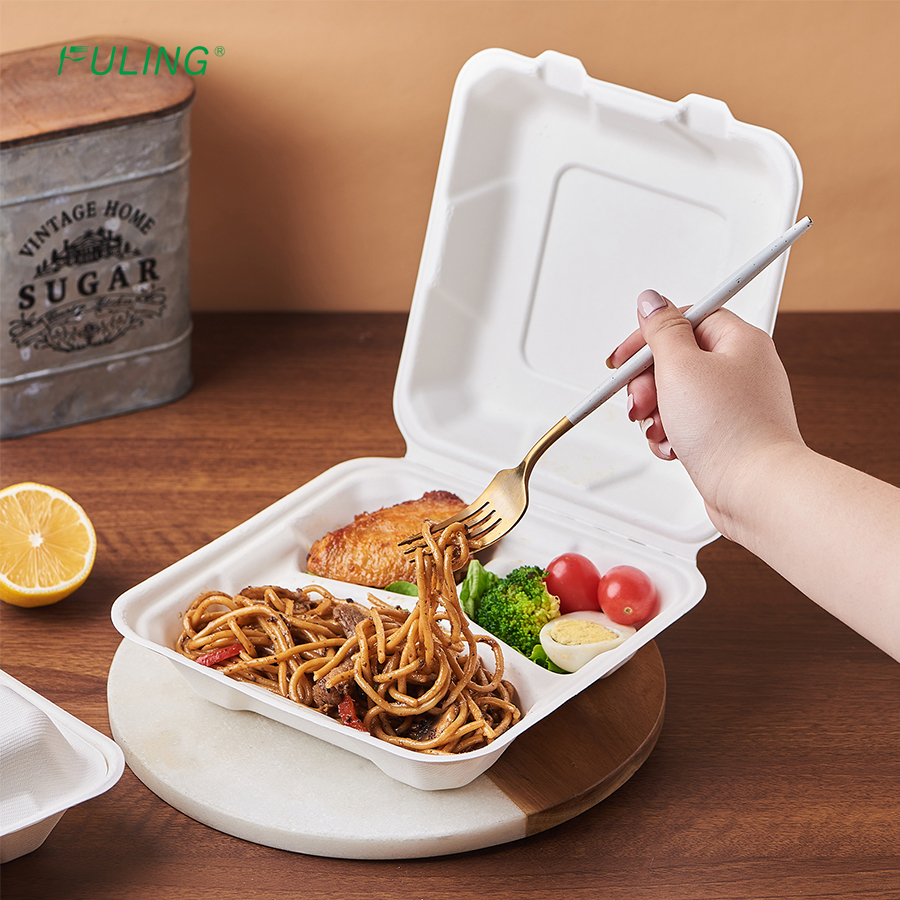
Using high-precision CNC injection and thermoforming molds, our portion cups, deli bowls, and multi-compartment lunch boxes feature micro-engineered perimeter locking rims. This prevents side-wall leakage and lid pop-off during third-party motor delivery logistics.
Future Sourcing & Industry Growth Trends (2025–2030)
The global disposable food packaging market is undergoing structural shifts driven by regulatory bans on expanded polystyrene (EPS), corporate ESG commitments, and supply chain diversification strategies.
1. The Rapid Transition from EPS Foam to MFPP & Fiber
Legislative prohibitions against Expanded Polystyrene (EPS) foam across North America, the European Union, and Asia-Pacific have accelerated the adoption of Mineral-Filled Polypropylene (MFPP) hinged clamshells. MFPP incorporates up to 50% natural inorganic minerals (such as calcium carbonate), significantly reducing fossil-fuel resin reliance while preserving structural rigidity, thermal insulation, and microwavability at competitive price points.
Key Buyer Impact: Lower carbon footprint with reduced exposure to virgin plastic resin price volatility.2. Dual-Base Manufacturing & Regionalized Freight De-risking
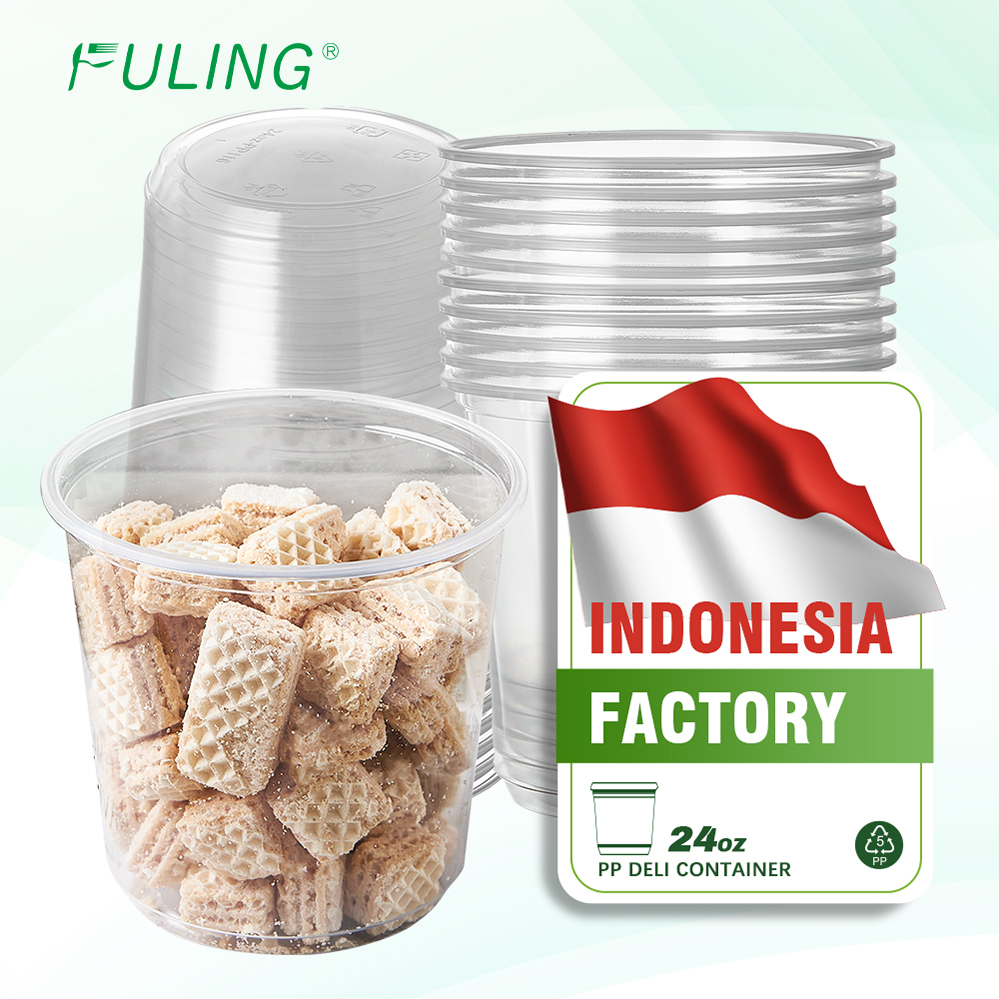
Global importers are increasingly mitigating geopolitical trade friction and tariff uncertainties by partnering with Chinese manufacturers operating dual-country production networks. Establishing expanded manufacturing footprints in Southeast Asia (such as our Indonesia production facilities) enables buyers to optimize shipping logistics, leverage preferential duty structures, and guarantee supply continuity.
Key Buyer Impact: Flexible origin sourcing (China / Indonesia) to bypass tariff bottlenecks.3. Circular Economy Monomaterial Packaging Designs
Recyclability guidelines are favoring single-polymer systems over multi-layer laminated materials that are difficult to separate in commercial waste streams. Future procurement prioritizes 100% PET cold drink cups with matching PET flat or dome lids, and 100% PP deli containers paired with PP lids, ensuring streamlined sorting and maximum post-consumer recyclability.
Key Buyer Impact: Simplified waste handling and compliance with global extended producer responsibility (EPR) mandates.4. Custom Brand Printing & High-Efficiency OEM Packaging
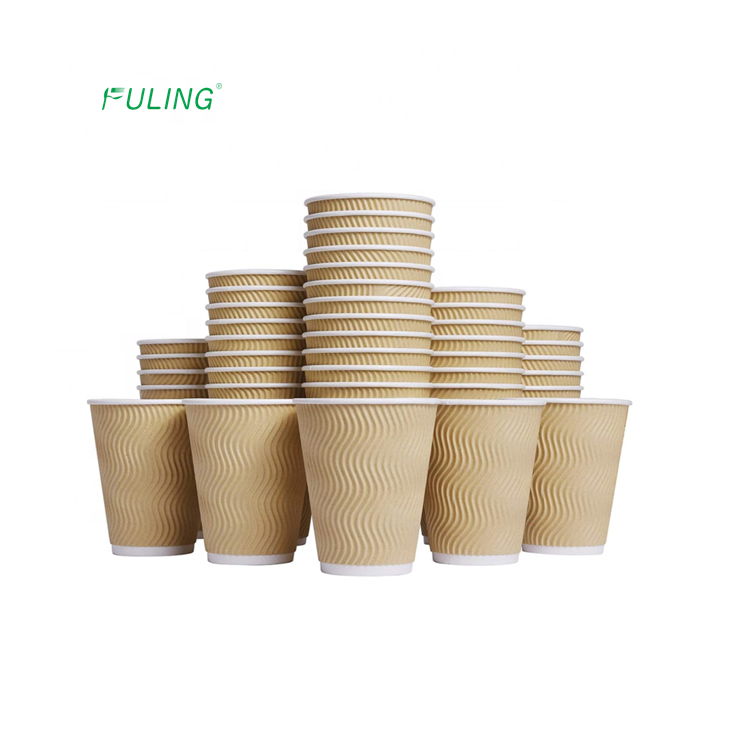
As food delivery and takeout become primary brand touchpoints, plain off-the-shelf packaging is being replaced by custom-printed branding. Modern high-speed flexographic and offset printing technologies allow up to 6 to 8-color vector art printing directly on double-wall paper coffee cups, ripple-wall cups, and plastic beverage containers at scale.
Key Buyer Impact: Transform standard takeaway containers into high-impact marketing assets.Enterprise Factory Strengths & Infrastructure
From raw material selection to automated multi-cavity injection molding, cleanroom thermoforming, and consolidated export logistics, our manufacturing operations follow international B2B operational standards.
Virgin Food-Grade Resin Guarantee
We exclusively utilize 100% virgin resin sourced from audited petrochemical suppliers (such as Sinopec, Formosa Plastics, and Sabic). Every lot undergoes melt flow index (MFI) verification and density testing, ensuring zero heavy metal contamination, zero plasticizer leeching, and full compliance with FDA 21 CFR 177 standards.
Rigorous In-Line Quality Assurance
Our automated quality control protocol implements optical vision sensors and continuous drop-test sampling (AQL 1.0 Major / 2.5 Minor standards). Wall thickness consistency, rim stackability, and hermetic sealing integrity are tested across every production batch before entering dust-free packing channels.
Consolidated Mixed-SKU Freight Optimization
To minimize ocean freight costs per unit, our logistics engineers calculate container volumetric utilization. Distributors can mix paper coffee cups, PP meal prep containers, portion cups, and individually wrapped cutlery kits in single 20GP, 40GP, or 40HQ shipments without sacrificing load stability.
Need Custom Mold Engineering or Factory Direct Pricing?
Contact our international OEM sales engineering team to receive complete product specifications, food-contact test reports, and factory-direct volume quotes tailored to your market.
Get a QuoteFrequently Asked Questions by B2B Importers
Key answers regarding material compliance, OEM tooling, lead times, and international shipping protocols.
What is the technical structural difference between PET, PP, and MFPP food packaging?
PET (Polyethylene Terephthalate) provides optical glass-like clarity, high stiffness, and gas barrier properties, making it ideal for cold beverages, fruit bowls, and salads under 60°C. However, PET cannot be microwaved. PP (Polypropylene) is a semi-flexible, translucent polymer with high thermal resistance up to 120°C, rendering it fully microwavable and suitable for hot soup, hot fill deli items, and meal prep. MFPP (Mineral-Filled Polypropylene) blends polypropylene resin with up to 50% natural mineral compounds (such as calcium carbonate). This modification increases structural rigidity, mimics the insulating stiffness of EPS foam, lowers total fossil-fuel polymer content, and remains fully microwavable and grease-resistant.
What food-contact safety certifications and testing documentation can your factory provide for customs clearance?
Depending on the target export market, we provide comprehensive third-party laboratory test reports from accredited bodies (SGS, TUV, Intertek). These include US FDA 21 CFR 177.1520 / 177.1630 overall and specific migration compliance, EU Regulation 10/2011 heavy metal and chemical migration testing, German LFGB compliance, PFAS-Free (Fluorine-free) test verification for plant fiber tableware, and FSC Chain of Custody certifications for paperboard sources. Audit documentation aligned with ISO 9001 and BRCGS Packaging standards is also available for corporate compliance reviews.
How do you support custom OEM/ODM branding, private labeling, and custom mold engineering?
We provide full-service OEM and ODM capabilities. For custom branding, we offer high-precision flexographic and offset printing up to 6–8 colors on paper cups, as well as In-Mold Labeling (IML) or screen printing on plastic containers. For custom dimensions or unique structural shapes, our tooling engineering team designs 3D CAD models and prototype 3D-printed/aluminum sample molds within 7 to 10 days. Once pre-production samples are approved for rim fit, stackability, and volume capacity, multi-cavity production molds are built for mass manufacturing.
What are the standard Minimum Order Quantities (MOQs) and production lead times for export orders?
For standard stock items in plain white, black, or natural clear colors, our baseline MOQ typically starts at 30,000 to 50,000 pieces per SKU, or 100 to 200 standard shipping cartons. Custom printed or custom color runs generally require 50,000 to 100,000 pieces depending on container size. Standard manufacturing lead time for standard items is 15 to 25 days upon deposit confirmation. Custom printed or newly molded products require 25 to 40 days total lead time, which includes artwork proofing and pre-production sampling.
Can we consolidate different packaging products into a single container shipment?
Yes. Container consolidation is one of our key operational strengths for international distributors. Importers frequently combine diverse packaging categories—such as cold drink PET cups, hot paper coffee cups, microwavable meal prep containers, portion cups, and wrapped PP cutlery sets—into a single 20GP or 40HQ container. Our packaging team provides optimized loading software layouts to maximize cubic meter space, minimize freight cost per unit, and prevent shipping damage.
Partner with a Trusted Food Packaging Exporter
Whether you are expanding a national restaurant supply business, launching a custom-branded packaging line, or looking for factory-direct sourcing to optimize purchasing costs, our team is ready to deliver.
Get a Quote